
Owner-run facility access
On a lot of these buildings the door is doing double duty as the only loading access, so when a cable frays or a roller seizes, the business behind it stops moving product until it's fixed.
Candler Mcafee, Atlanta
Commercial garage door repair for Candler-McAfee's 1960s-era shop and warehouse buildings, nine miles from our Atlanta shop. Steel doors, torsion springs, no branch on-site.
Watch-outs
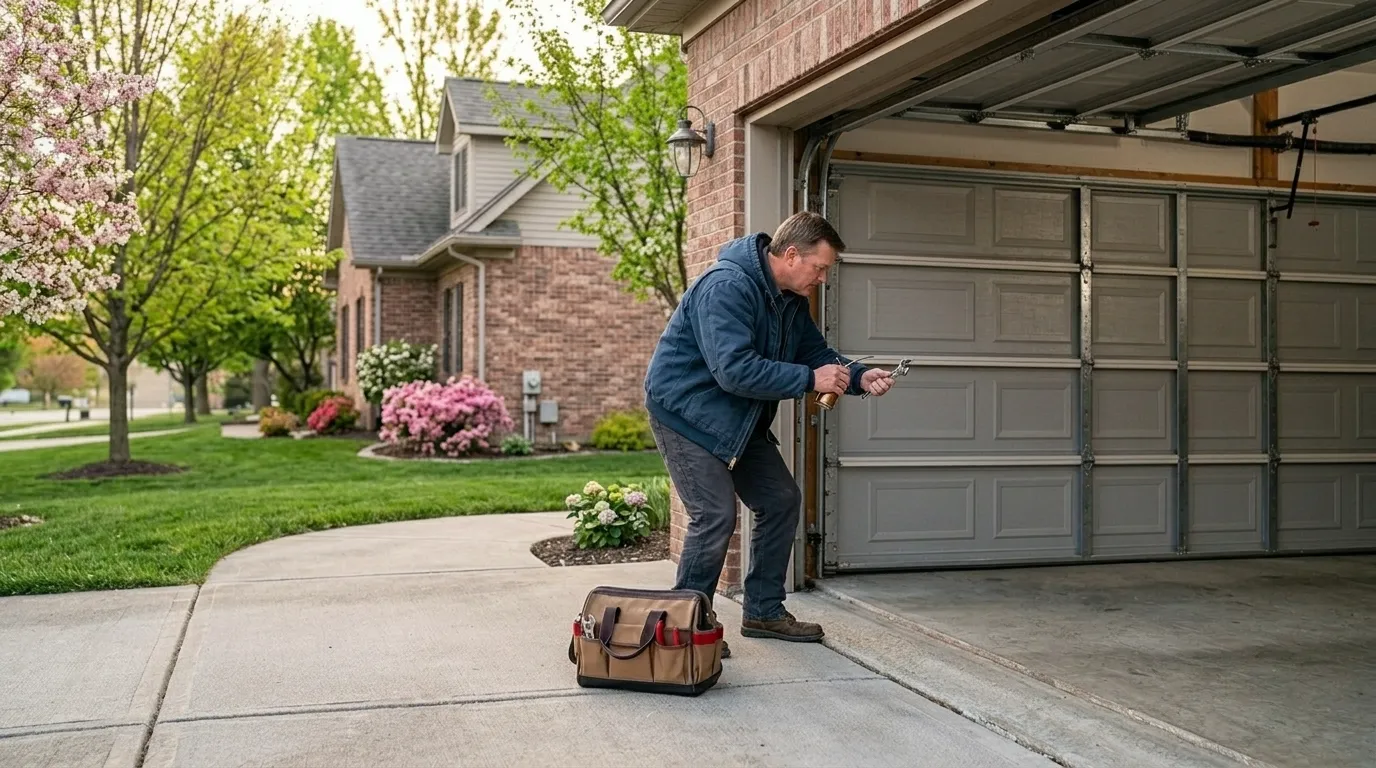
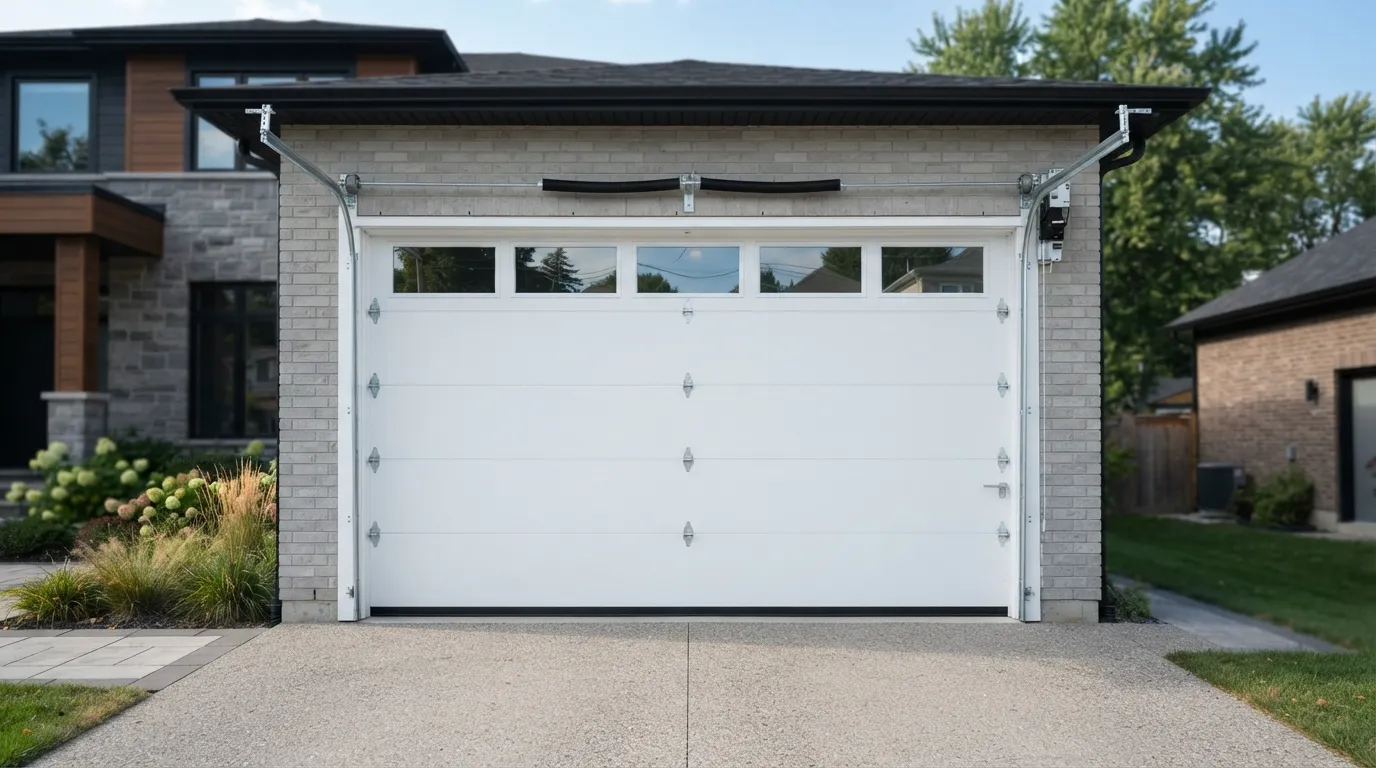
Most of the small commercial buildings in Candler-McAfee went up around the same time as the houses on the blocks behind them, roughly 1963. That means a lot of the shop and warehouse doors here are original steel sectional units on the low-headroom torsion setups that were standard for that build era - narrower track, a lighter spring than what gets installed today, and hinges that were never rated for the extra weight of a modern insulated panel bolted on later by whoever owned the place before.
On a lot of these buildings the door is doing double duty as the only loading access, so when a cable frays or a roller seizes, the business behind it stops moving product until it's fixed.
With 7,676 households in Candler-McAfee and a mix of small owner-run shops rather than chain retail, these aren't buildings with a facilities department on call - the owner is usually the one who notices the door won't close at 6pm and has to find someone who'll come out.
The cold-moderate winters this area gets don't help old weatherstripping or a spring that's already lost half its tension from age. None of this is a Candler-McAfee-specific fault by design, it's what happens to a 60-year-old commercial door that's never been swapped for a heavier-duty spring set.
Pricing
We don't publish flat prices here because a torsion spring swap on a single steel door and a full section replacement on a warped panel are two different jobs with two different bills.
What we can tell you is what drives the number: whether the track and drums are original 1960s-era hardware that has to be matched rather than just bolted to, whether the opener is commercial-duty or a residential unit someone installed to save money, and how many panels are actually damaged versus just dented.
Candler-McAfee's median household income sits at $62,299, and most of the calls we get out here are from owners who want the door fixed right the first time rather than patched twice - that usually means we're pricing a spring and hardware job, not a full door replacement, unless the panels themselves are rusted through.
We'll tell you on-site if a repair is worth it or if the door's old enough that a new one will cost less over five years than keeping the original alive. We won't quote a number over the phone before we've seen the hardware.
DIY or pro
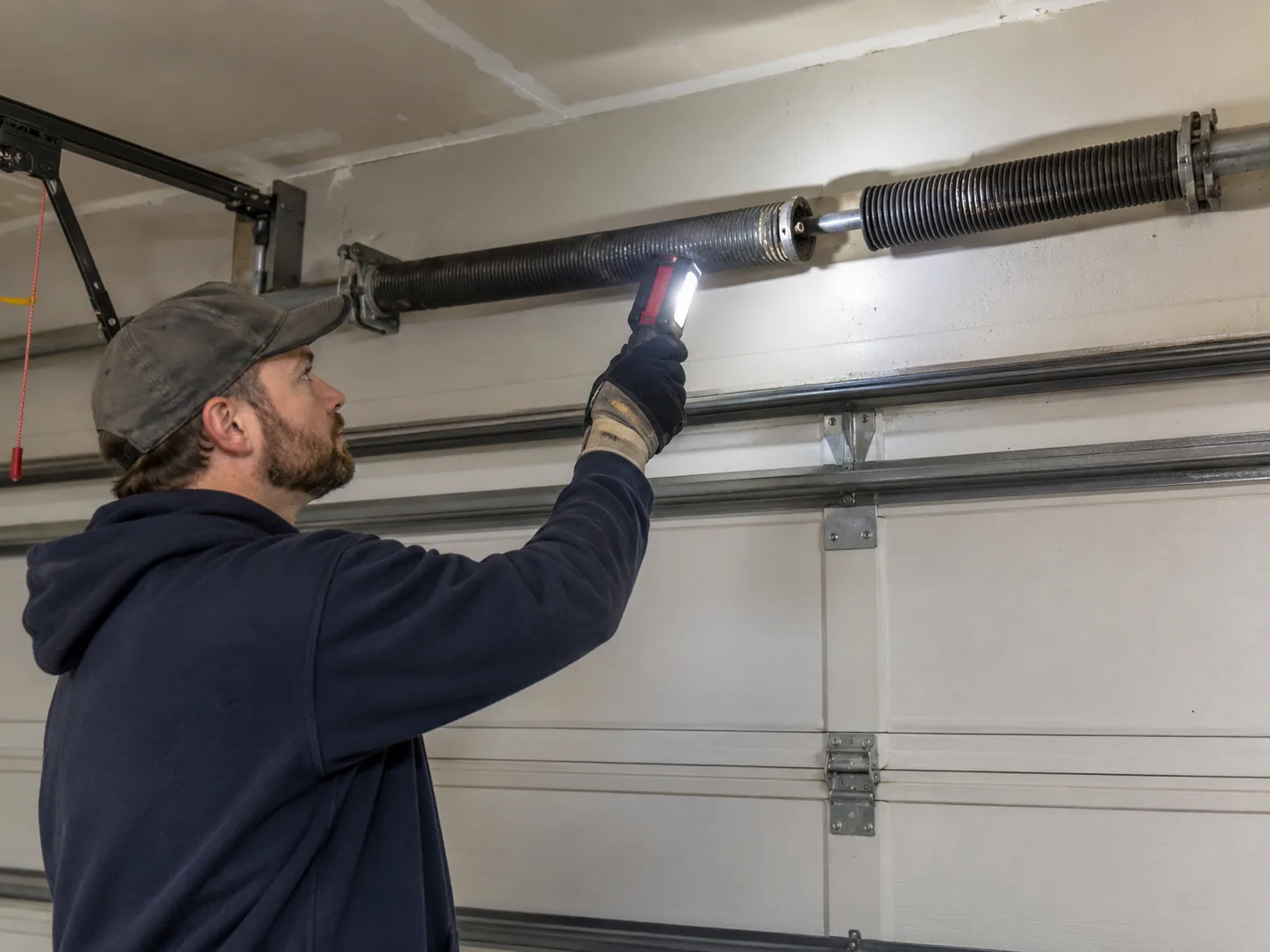
A commercial door is heavier than the one on a house, and on a lot of Candler-McAfee's older buildings the torsion spring is under more tension than the residential kits sold at hardware stores were ever designed to hold.
We don't recommend an owner or maintenance person open that spring cone without the right bars and clamps - a torsion spring under load is the single most common way people get hurt working on these doors, and it's not a job where a mistake is minor.
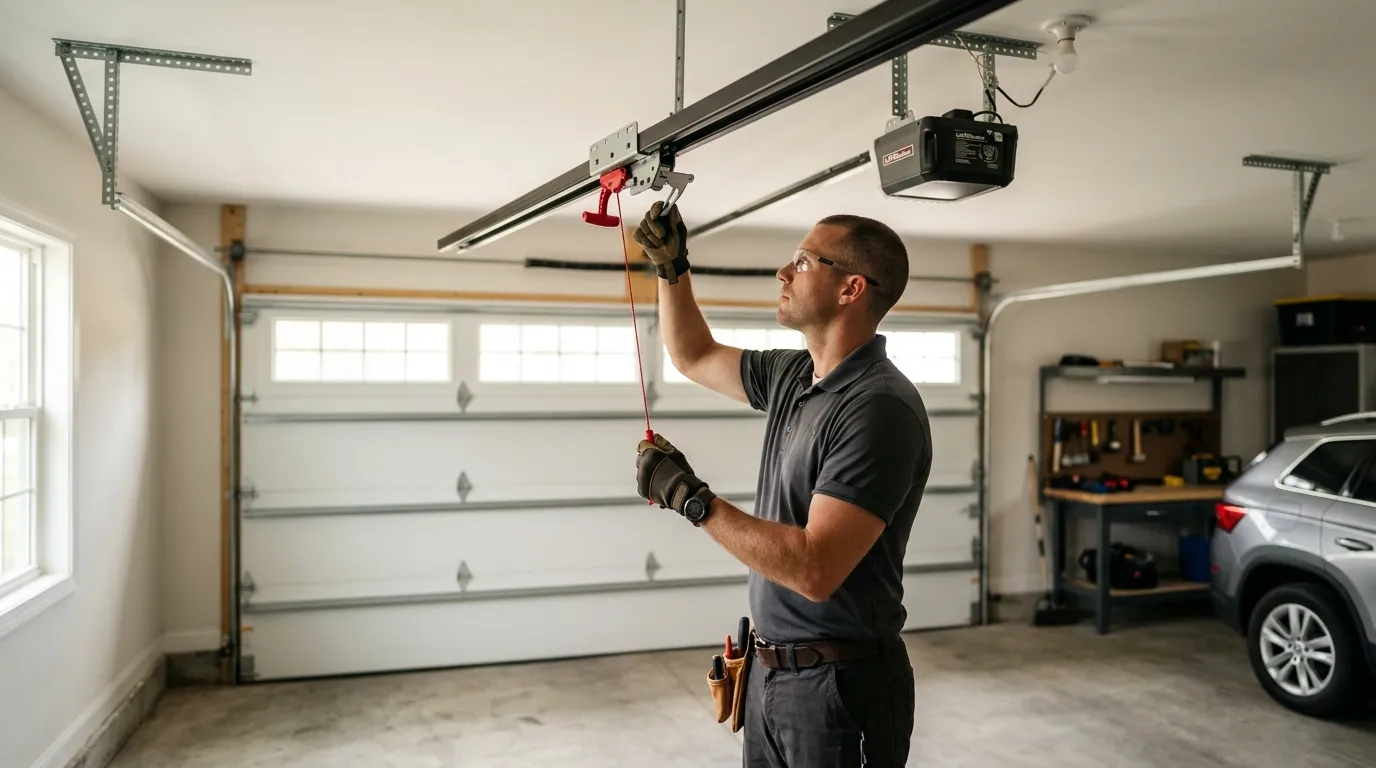
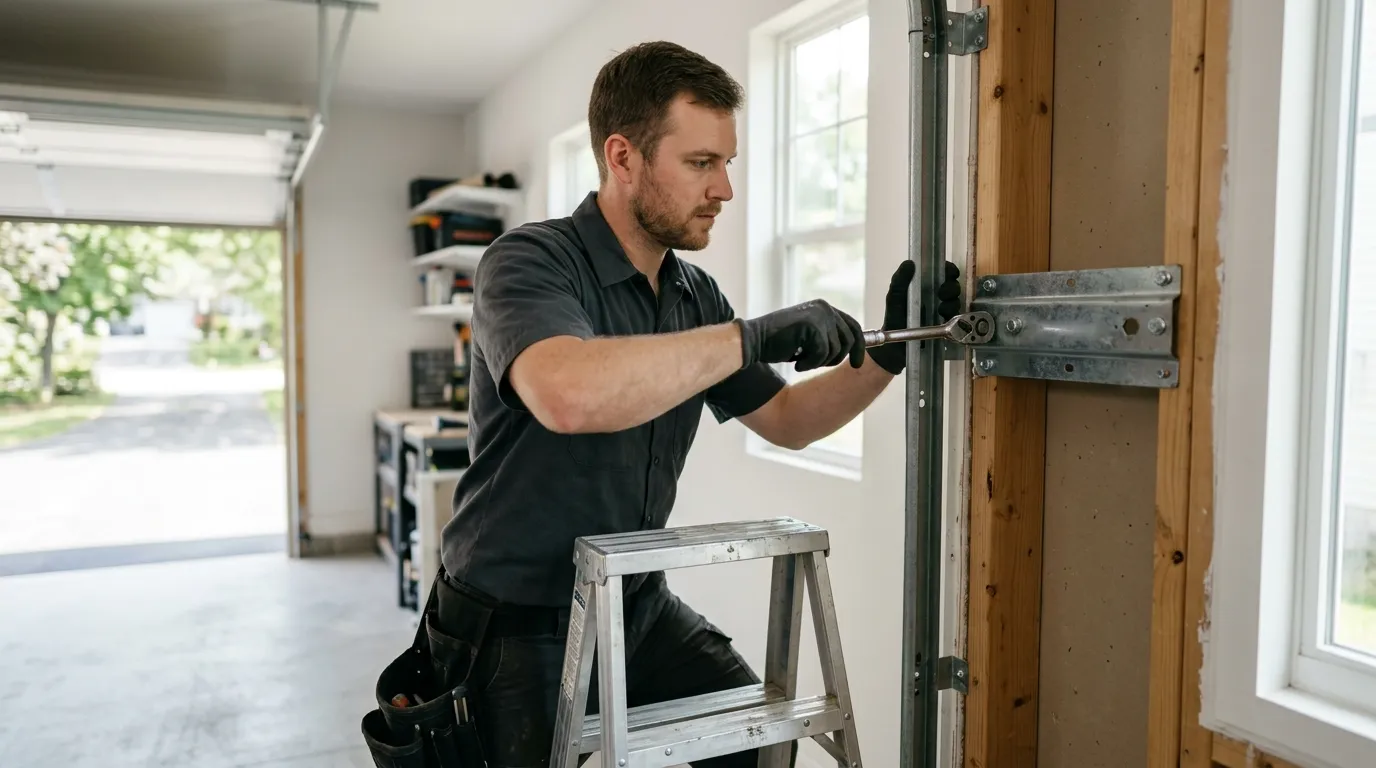
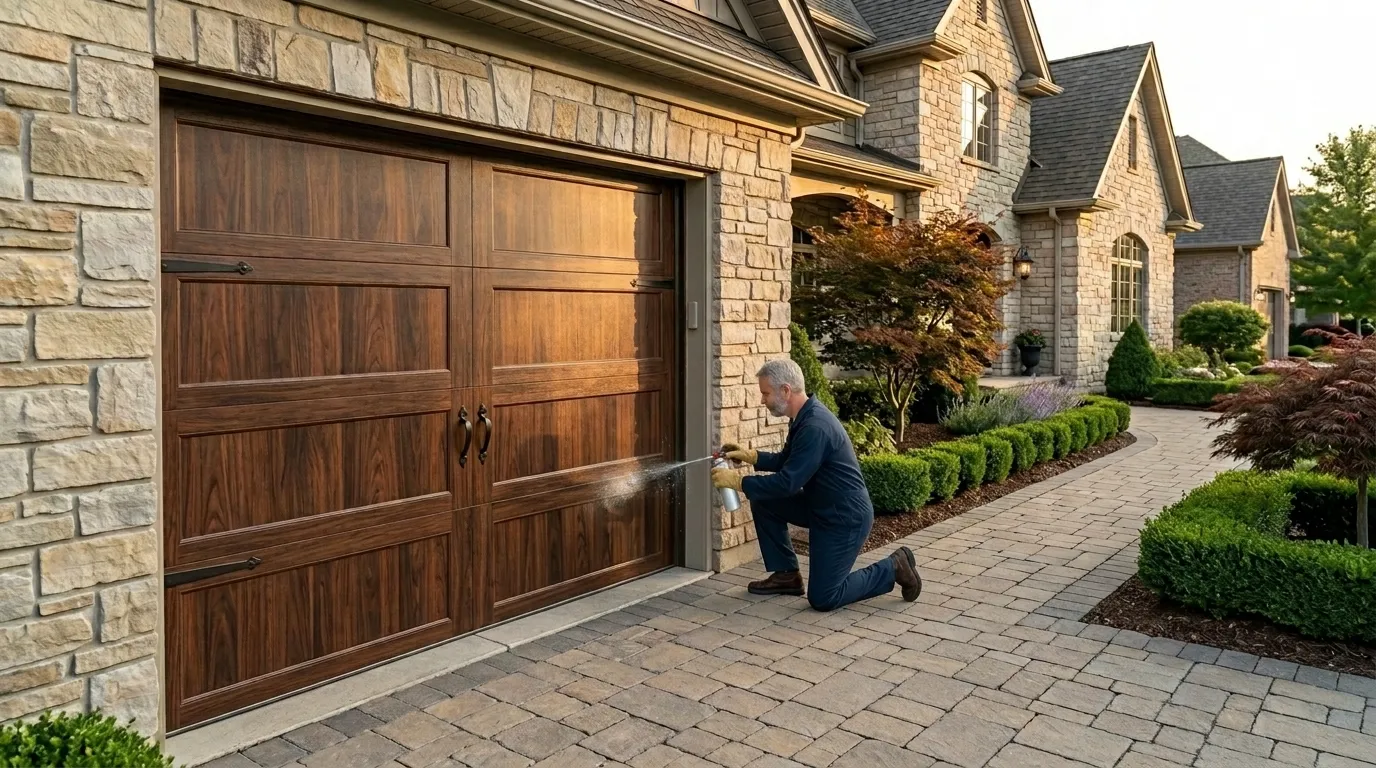
Cleaning tracks, lubricating rollers, tightening a loose hinge, and checking that the photo-eye sensors are aligned are all reasonable to handle yourself and worth doing between service calls. Replacing a cable, a spring, or realigning bent track on an original 1963-era door is not.
If your door is dragging, binding, or the opener is straining and reversing before it closes, that's a hardware problem, not a lubrication problem, and it's worth a call rather than a workaround.
On the truck
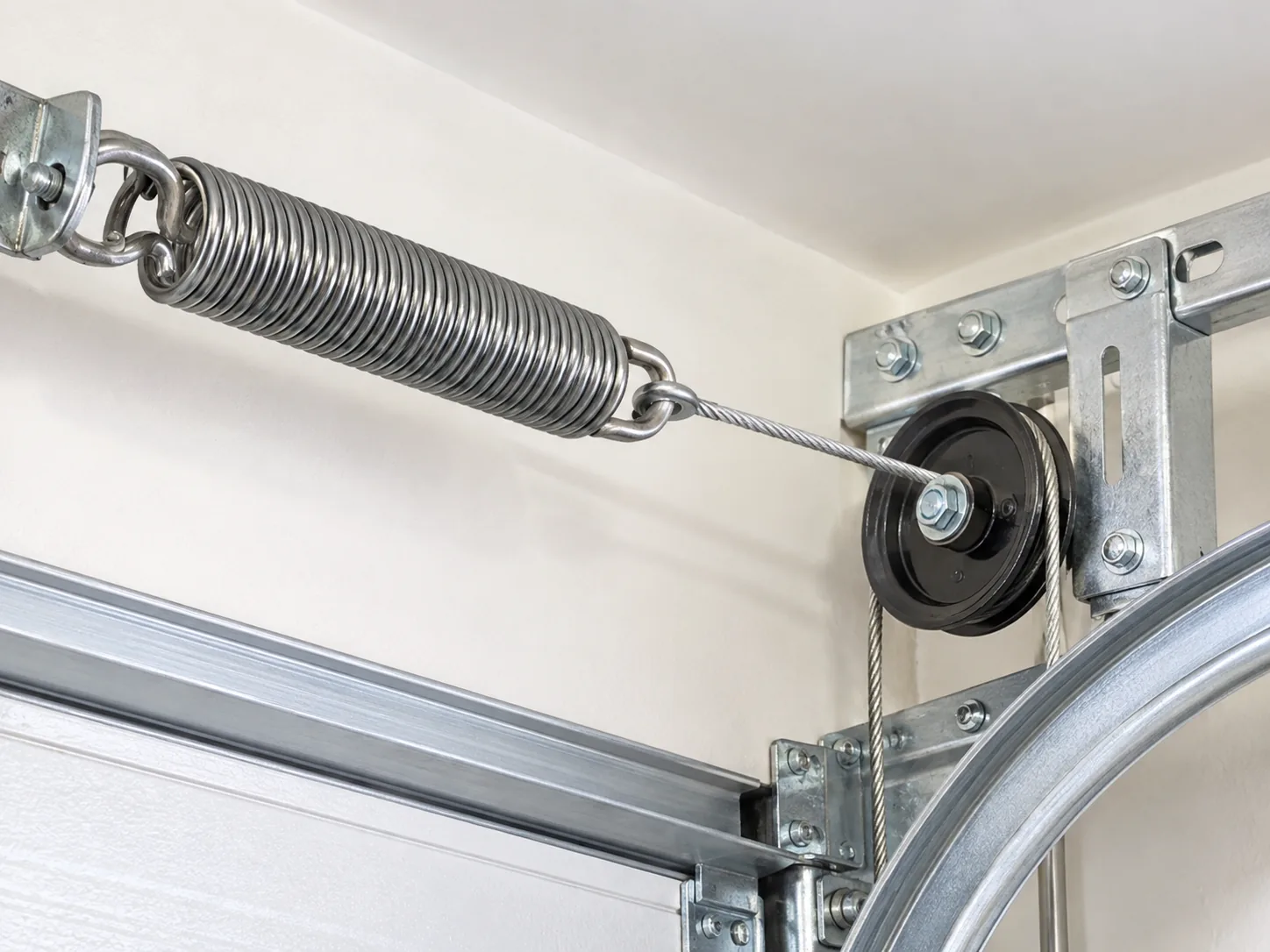
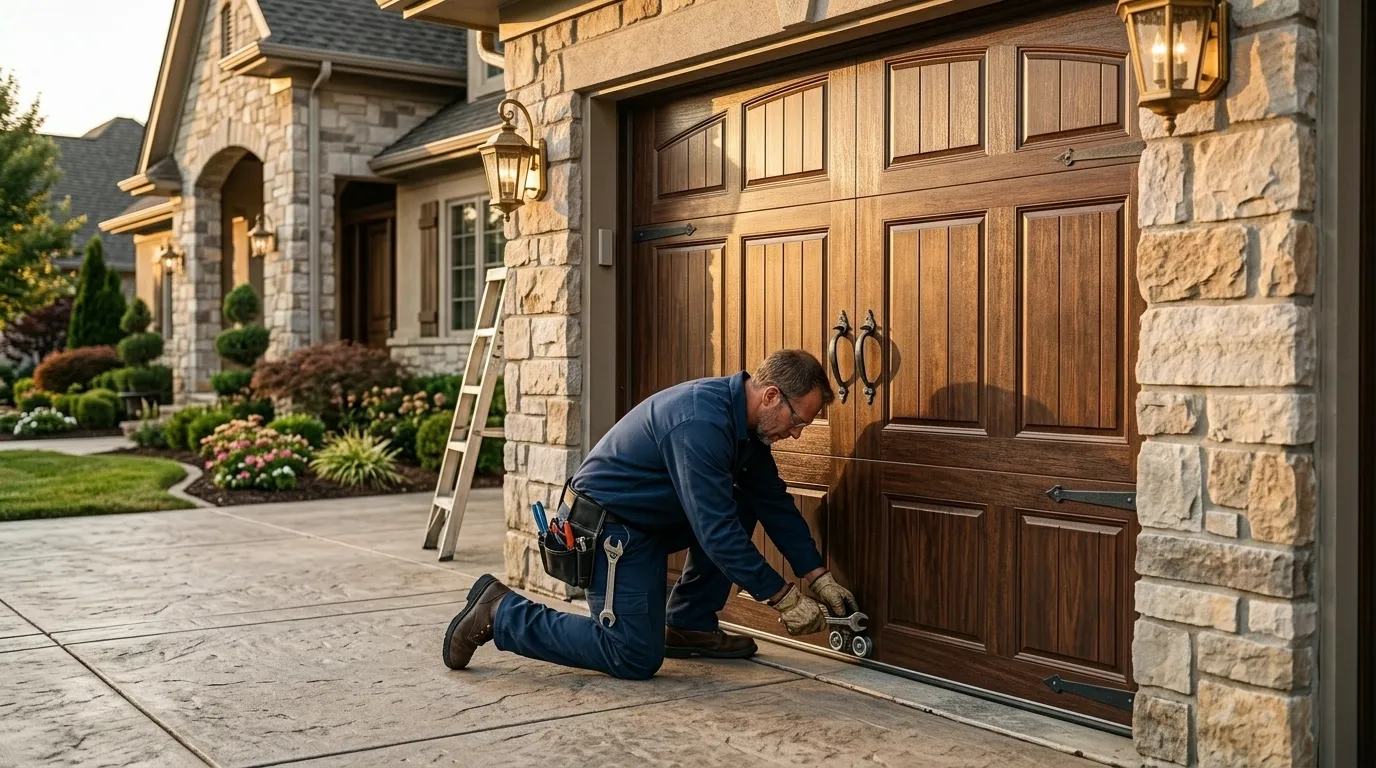
We come out to Candler-McAfee from our Atlanta shop, nine miles away, so the truck carries what covers the range of doors we actually find in this part of the service area: torsion springs in several wind and wire sizes to match older low-headroom setups, extension springs for the buildings that still run that older style, replacement cables and drums, and both residential and light-commercial rollers since a lot of these buildings have a mix of both installed over the years. We stock common photo-eye sensors and standard limit switches for openers. What we don't carry as a stock item is a made-to-size steel panel for a discontinued door line - if your section is a custom width or an old profile nobody makes anymore, that part gets ordered and there's a wait on it. We'll tell you that lead time up front rather than promise a same-day fix on a part we don't have.
Questions
No. We run out of our Atlanta shop and drive out to Candler-McAfee, about nine miles away, for every call. There's no separate branch or drop-off location here - one crew, one set of trucks, covering the whole area.
Commercial sections are usually thicker steel and often wider than residential panels, and a lot of Candler-McAfee's buildings from the 1960s were built with a single large door rather than a double, so the spring carrying that weight has to be sized for it. That's not a job for a residential spring kit.
Depends on the panels. If the steel is rusted through or the door's been driven into more than once, a new door often costs less over a few years than repeated patch repairs on an original 1963-era unit. If it's just hardware - spring, cable, rollers - repair is almost always the cheaper call.
Explore more
Ready when you are
Atlanta Garage Door Pros repairs and installs garage doors, springs and openers in Atlanta, GA and the surrounding area.