
Distance dispatch reality
That's not a same-block response, and we won't pretend otherwise. What it does mean is that when we book you in, we plan the drive into the appointment window instead of guessing at it after the fact.
Powder Springs, Atlanta
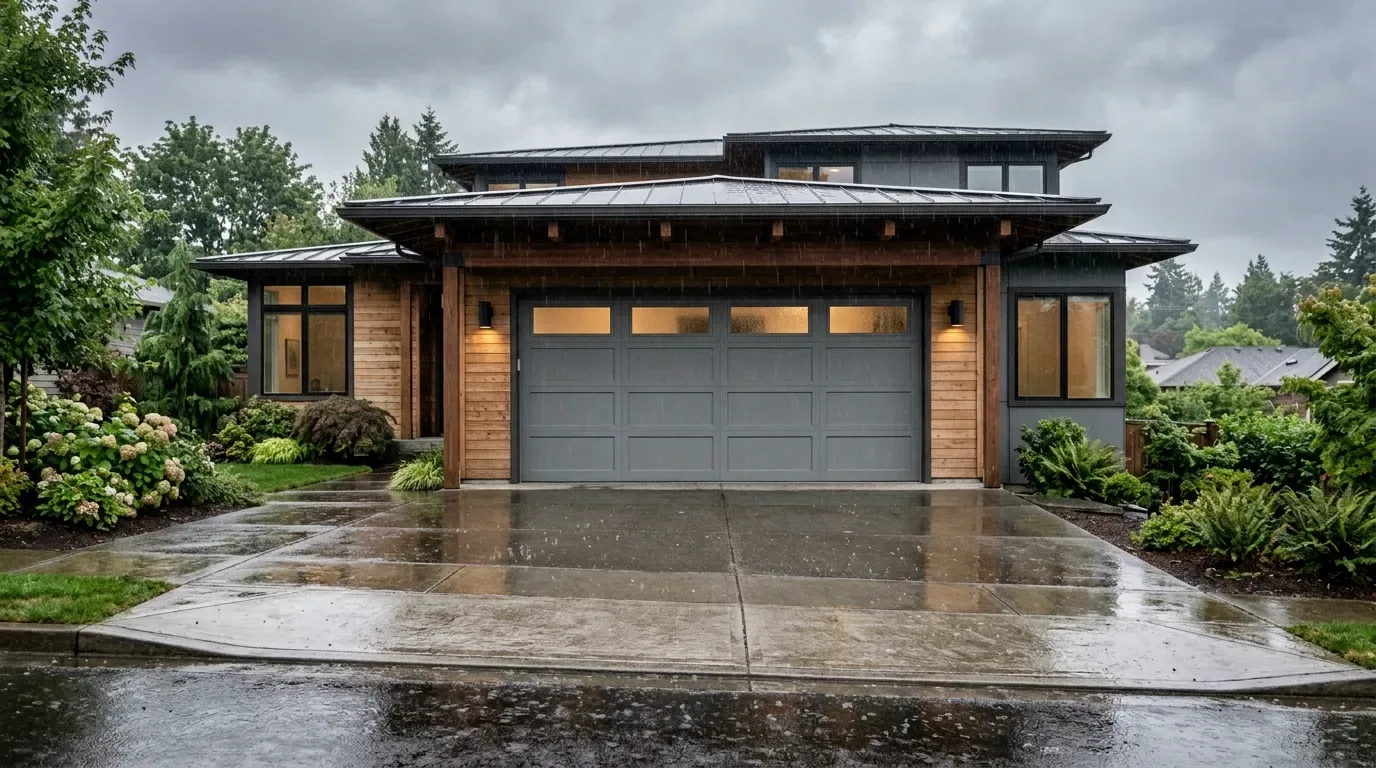
Garage door repair for Powder Springs homes built mostly after 1990, where openers and torsion springs are newer than the rest of the Atlanta service area. Truck runs from Atlanta, 16 miles out.
Downtime
We run this job out of Atlanta, and Powder Springs sits about 16 miles out, which is worth saying up front because it means a truck has to cross town before anyone touches your spring or track.
That's not a same-block response, and we won't pretend otherwise. What it does mean is that when we book you in, we plan the drive into the appointment window instead of guessing at it after the fact.
A door stuck open is a break-in risk and a door stuck shut is a car you can't get to work - either way, tell us which one it is when you call, because that changes what goes on the truck before we ever leave Atlanta.
Most of the calls we get from this side of the county are openers and springs, not full door replacements, and that tracks with the age of the housing stock out here. A newer torsion spring or a logic board under warranty from the manufacturer is a different job than a door nobody's touched since the Carter administration, and it usually gets you moving again faster.
DIY or pro
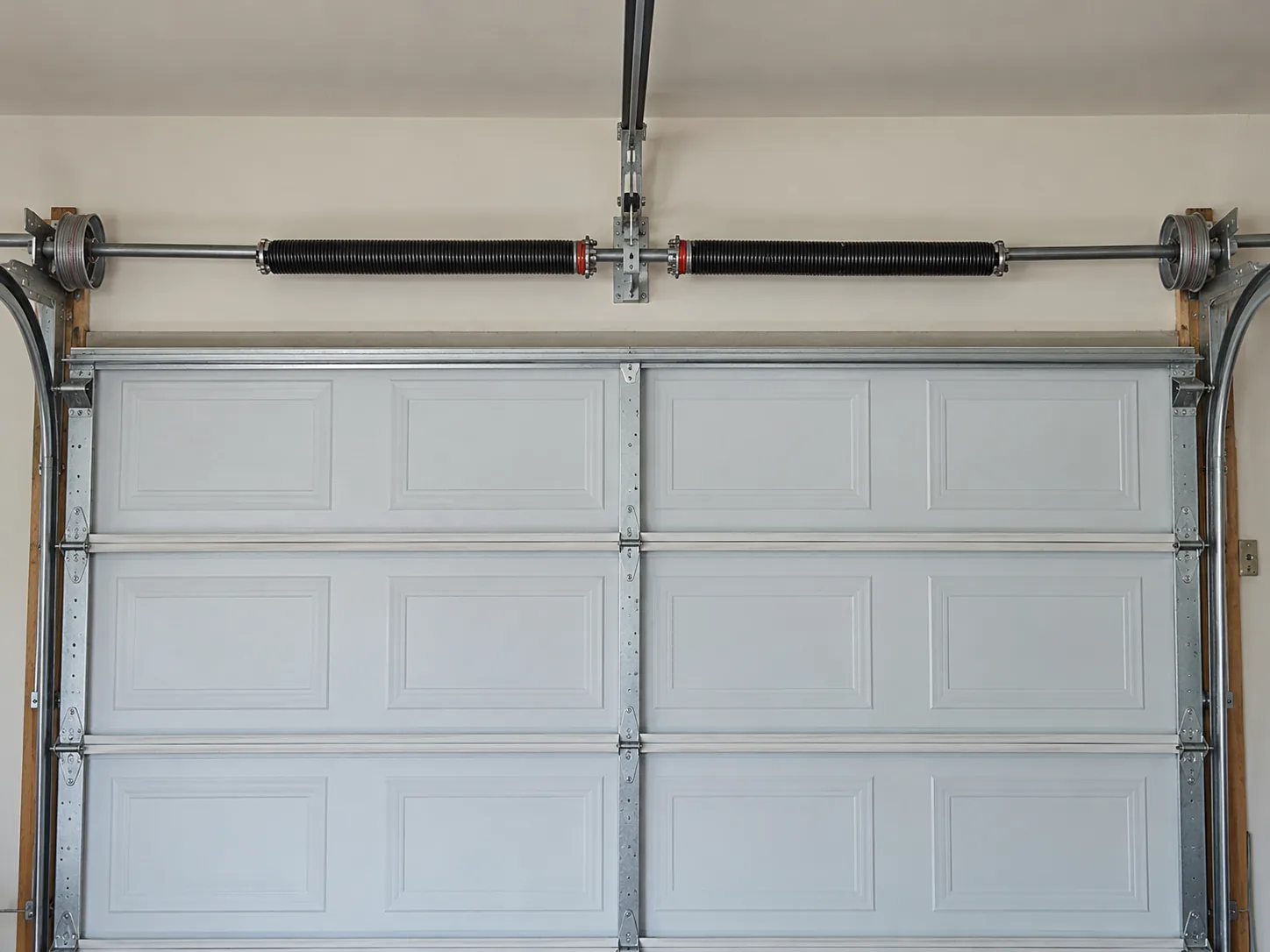
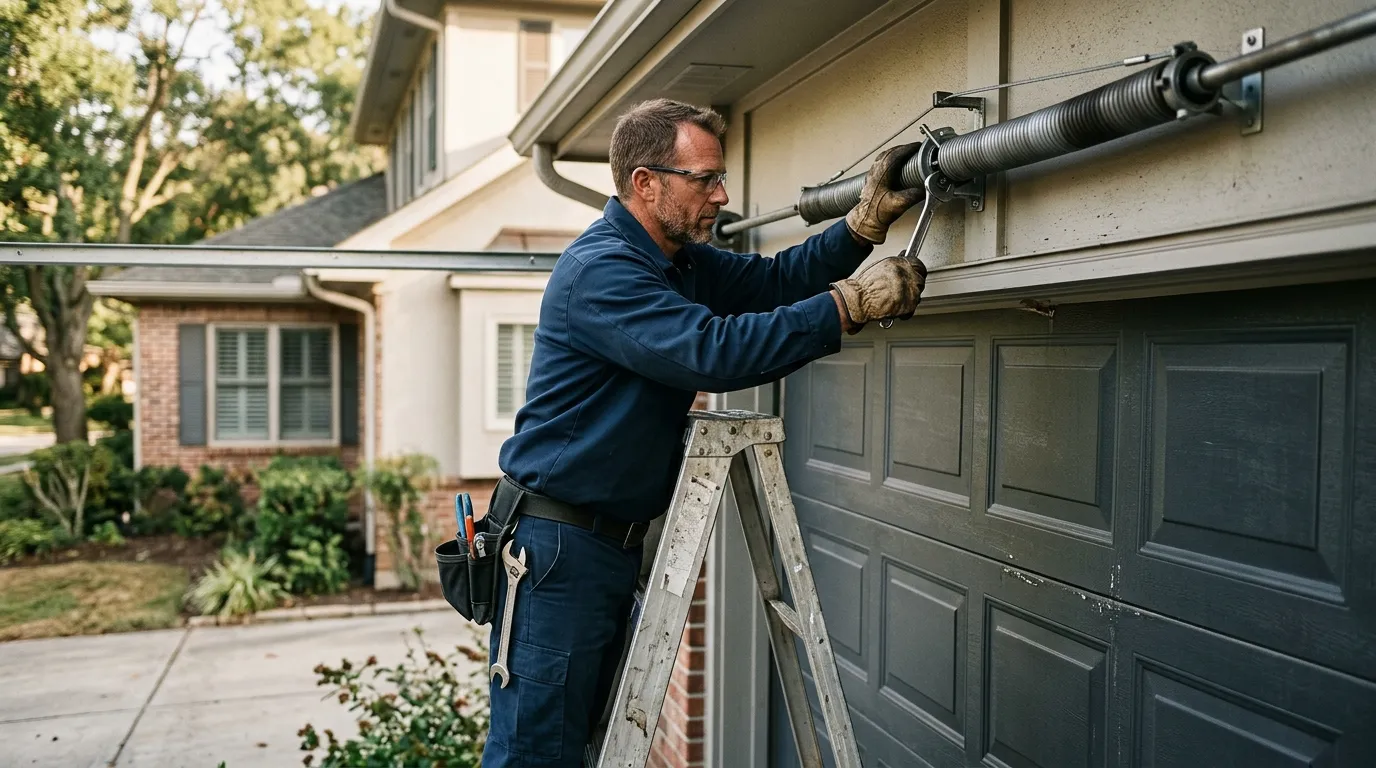
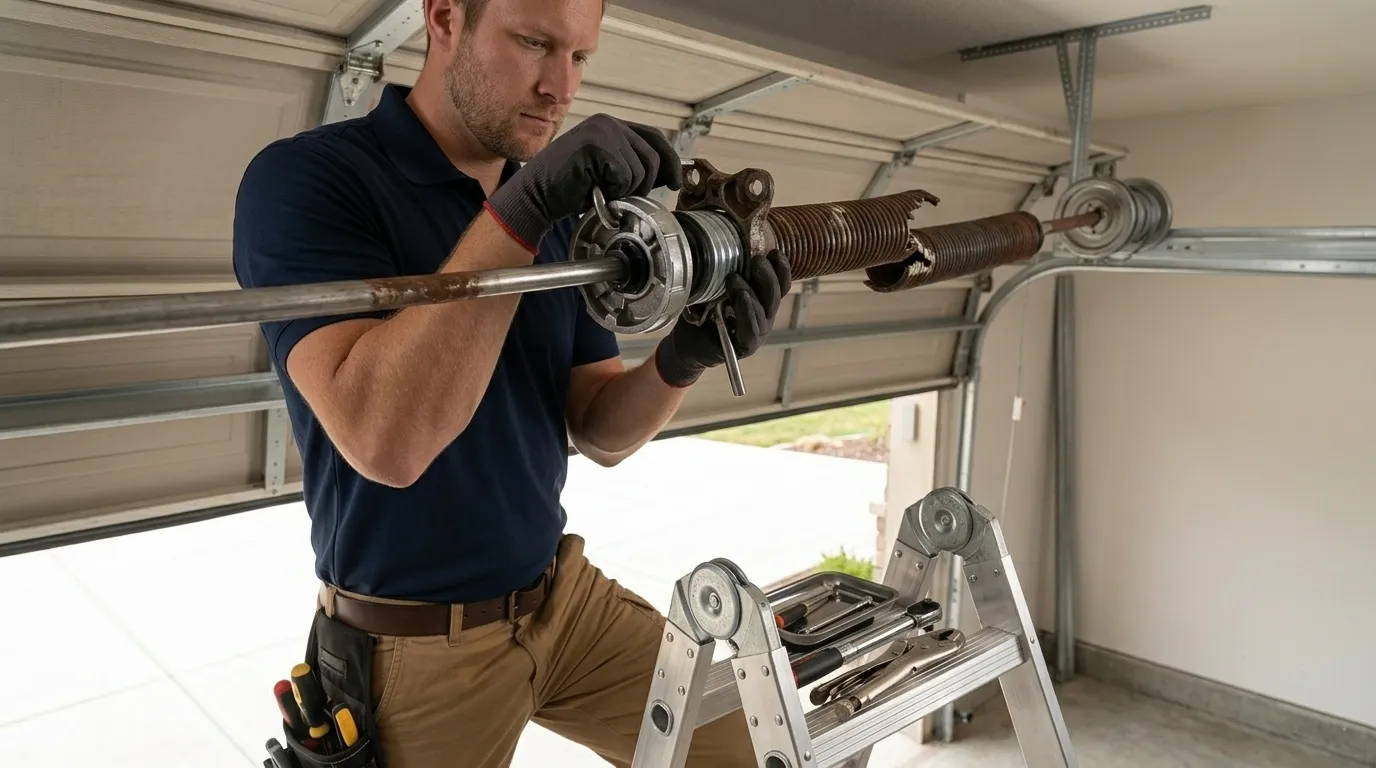
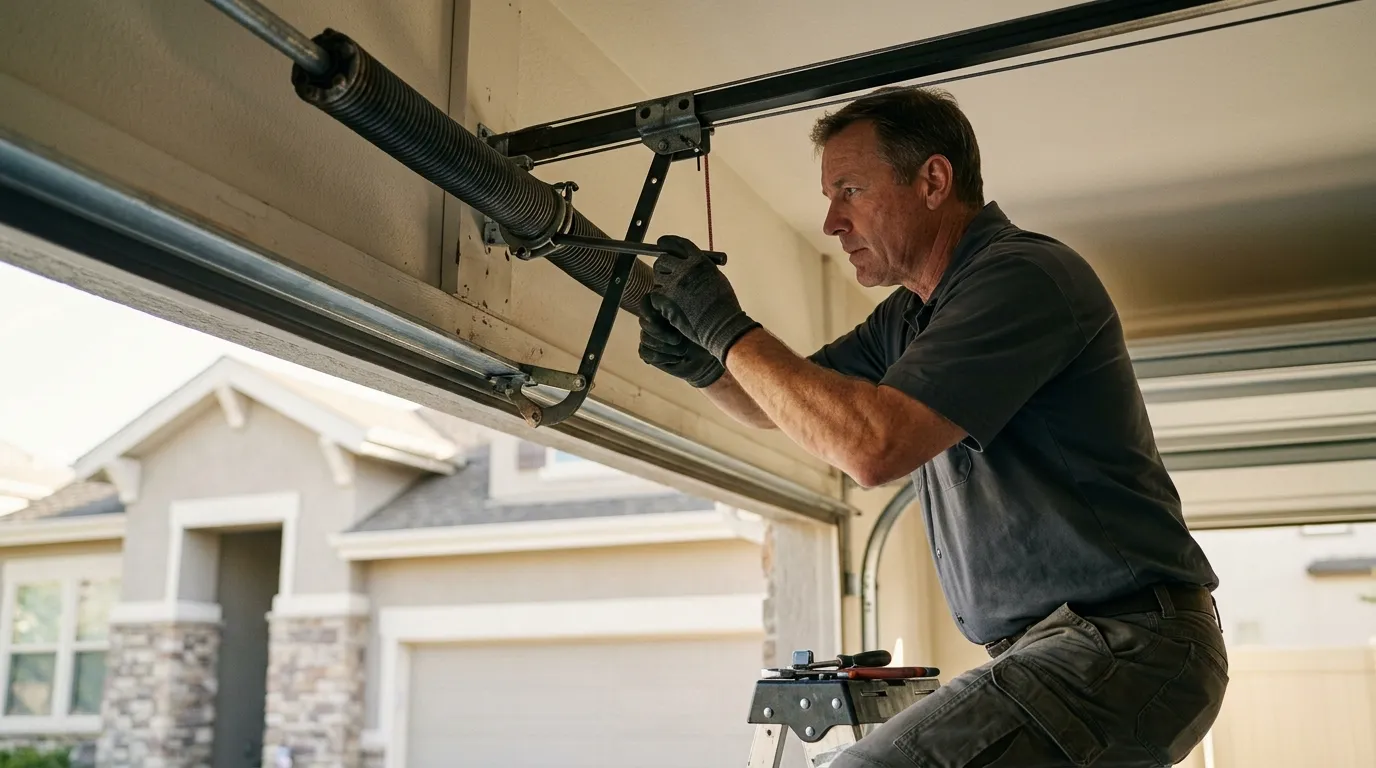
A garage door spring under tension will put you in the hospital, full stop - that's not a Powder Springs thing, that's a physics thing, and it applies whether the door is five years old or fifty.
Where the age of the house matters is the opener. Houses in this part of the service area were mostly built well after the 1970s wave that put in the stripped-gear openers and worn-out sensors we deal with elsewhere.
If your opener here is acting up, there's a real chance it's a logic board, a sensor alignment, or a limit switch setting - things a homeowner can sometimes check without opening a spring cabinet.
What you can safely do yourself: check that the photo-eye sensors near the bottom of the track are aligned and not covered in dust, listen for a grinding sound versus a clean click, and check the wall button wiring if the opener won't respond at all. What you shouldn't touch: the torsion spring, the cable drum, or anything under load. If in doubt, call before you turn a wrench.
Symptoms
The doors we get called out for here skew toward opener trouble rather than the rotted panel or rusted-through track we see on the oldest housing in the wider service area.
A door built into a house from the 1990s or later usually has a steel or insulated panel that's held up fine - the failure point is almost always mechanical or electronic: a stripped drive gear, a failing capacitor in the motor, a misaligned safety sensor, or a spring that's simply worn out from thousands of cycles rather than rust.
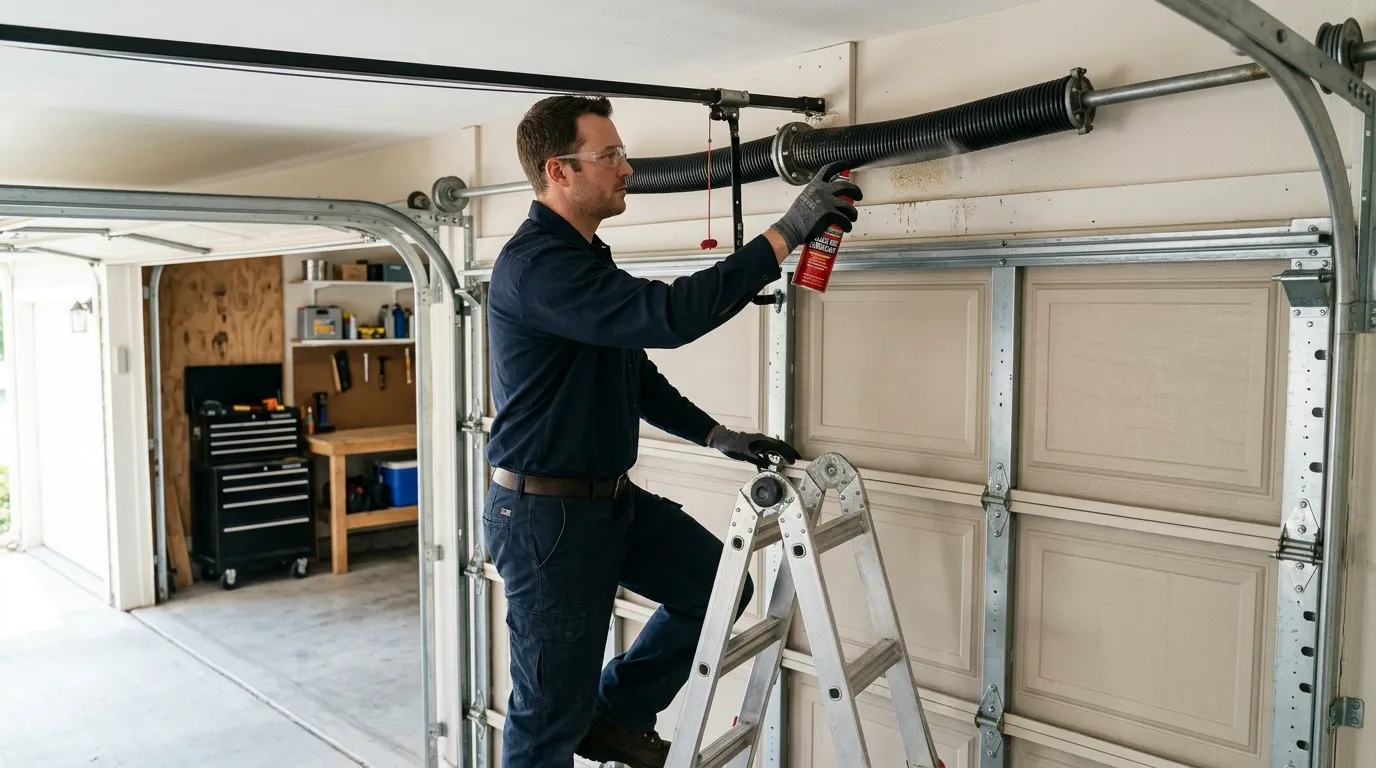
Colder mornings in this climate band do the springs no favors. Metal contracts, lubricant thickens, and a spring that was already near the end of its life will pick a cold snap to let go.
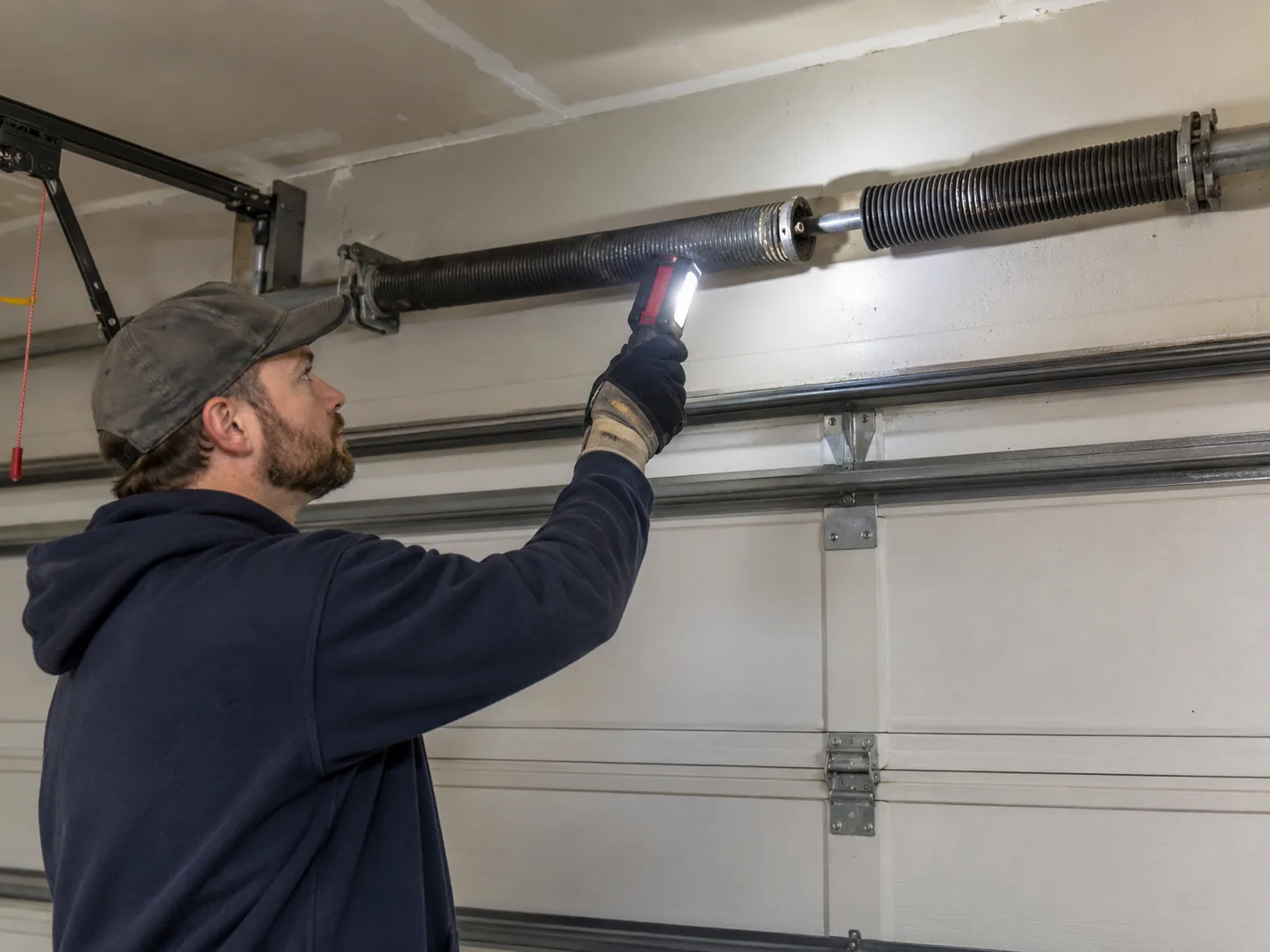
If your door has started opening slower than it used to, or the opener strains and reverses partway up, that's usually the spring telling you it's close to done, not the opener itself failing.
On the truck
For this part of the service area we load for openers and torsion hardware first, because that's what the housing age out here calls for most often - newer logic boards, standard-width torsion springs, drive belts and chains for openers that are still well within their working life. We're not loading for the oldest one-piece doors or obsolete extension-spring drums you'd find on the pre-1960s stock closer to Atlanta's core, because that's not what's on the ground in Powder Springs.
What we can't always guarantee same-visit is a specific opener logic board if your unit is an odd or older model - some parts have longer lead times than others, and we'd rather tell you that up front than promise a fix we can't deliver on the first trip. If that happens, we'll get the door safe and usable and schedule the return once the part's in hand.
Booking
Tell us the age of the house if you know it, or at least whether the door and opener are original to the build - that one detail changes what we bring.
Since the trip out is real mileage from Atlanta, we book by symptom, not just by time slot: a door stuck shut blocking a car goes ahead of a slow opener that still works.
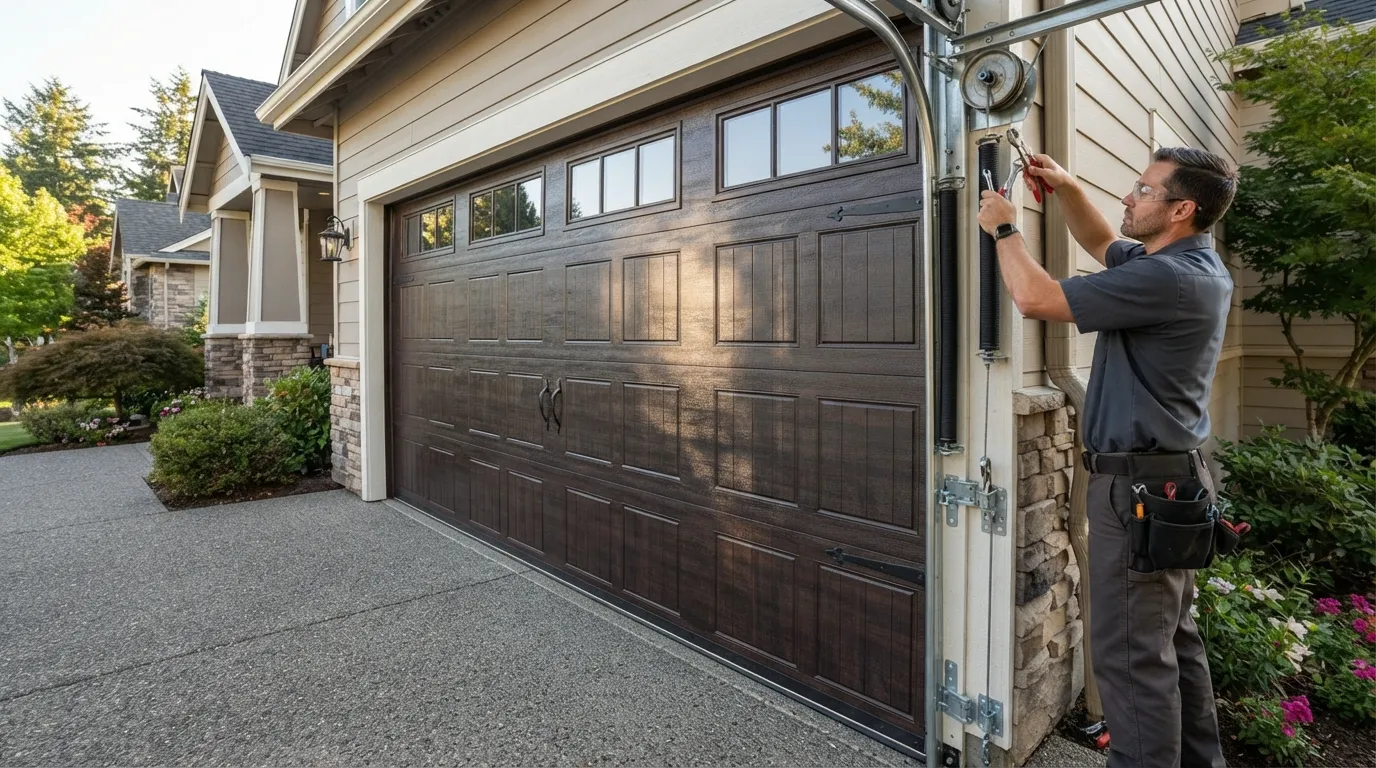
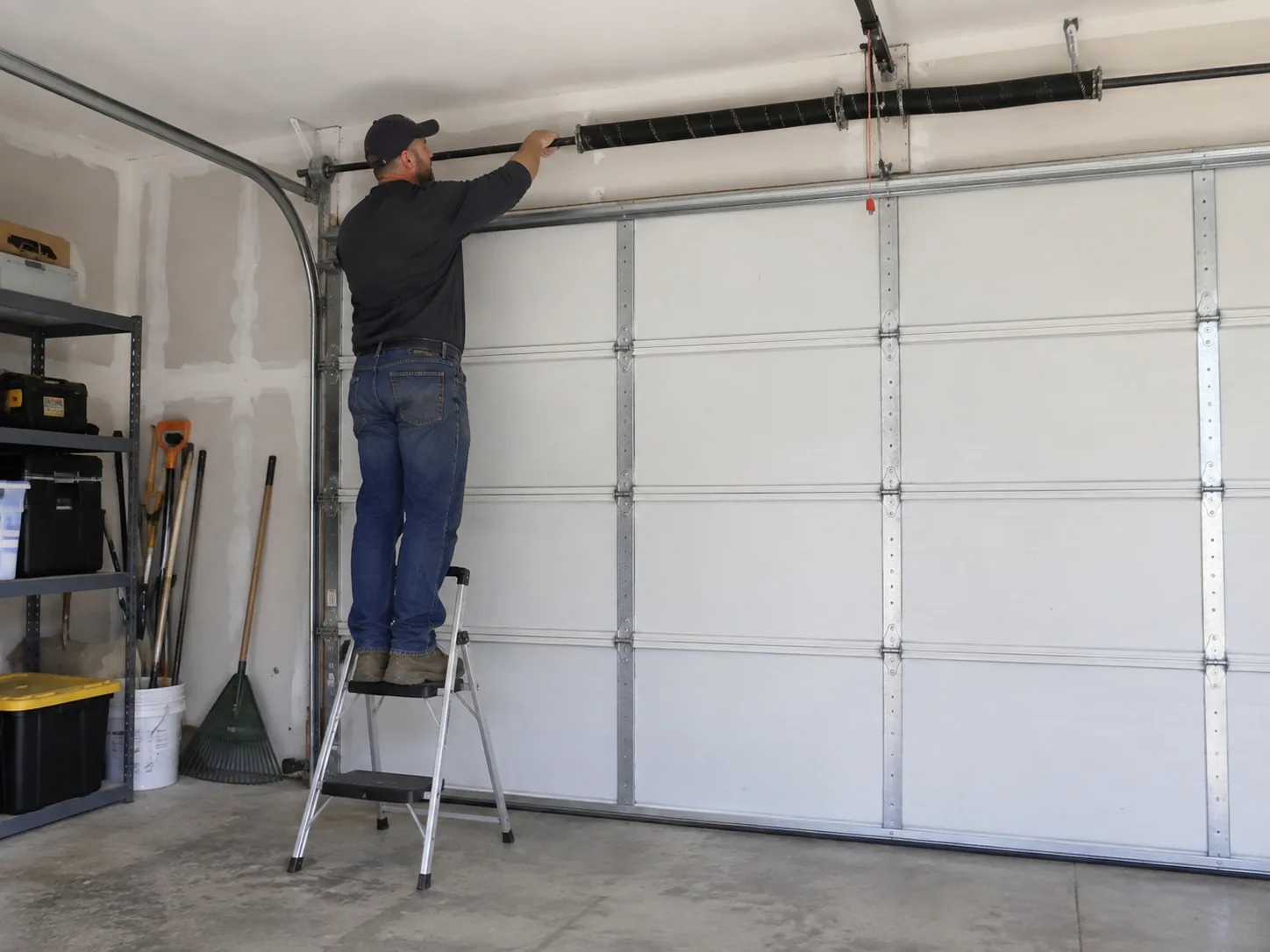
If you can send a photo of the spring setup (torsion bar across the top versus springs on either side of the track) before we arrive, that helps us load the right parts the first time instead of a second trip.
Pricing
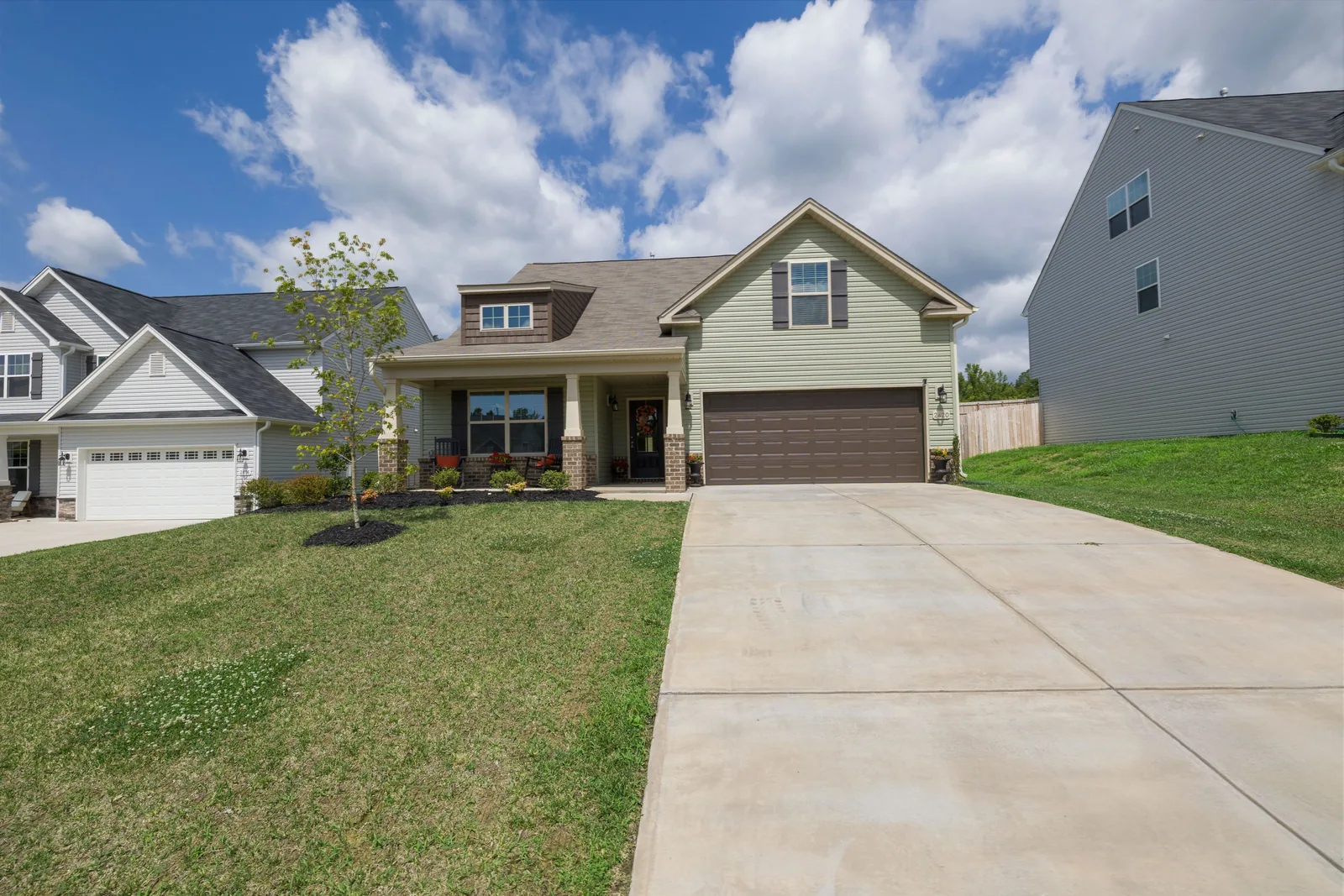
Median household income in Powder Springs runs close to $97,000, well above the roughly $63,449 median across the wider service area we cover from Atlanta - and that gap matters for the repair-or-replace call. On a house built in the 1990s or later, a broken spring or a bad opener board is almost always a repair, not a replacement, because the door itself and the track are still sound. Replacing a whole door on a house this age rarely pencils out unless the panel itself is physically damaged.
We don't have a flat price to quote you here - springs, drums, and opener parts vary by brand and by what's actually failed - but the shape of the decision is simple: if the door and track are original to a house built after 1990, fix the part that broke. If you're dealing with a door that predates the house, that's a different conversation, and one we can only have once we've seen it.
Questions
We run this job from Atlanta, about 16 miles away. We don't keep a branch or depot in Powder Springs, so build the drive into your expectations when you book. We schedule by symptom - a door that won't close for security reasons gets priority over one that's just slow.
Most houses in Powder Springs were built in the 1990s or later, which means the door and track are usually still sound even when the spring or opener fails. Full replacement makes sense when the panel is physically damaged, not just because a part wore out.
Cold thickens lubricant and makes metal contract, which puts extra strain on a torsion spring that's already near the end of its life. It's usually the spring reaching its limit, not the opener motor itself, that shows up first on a cold snap.
Usually, since most openers out here are newer, common models. Some older or less common logic boards have longer part lead times, and if that's the case we'll say so upfront, make the door safe, and schedule the return trip once the part's in.
Explore more
Ready when you are
Atlanta Garage Door Pros repairs and installs garage doors, springs and openers in Atlanta, GA and the surrounding area.