
Druid Hills, Atlanta GA
Garage Door Service for Druid Hills's 1960s Housing Stock
Serving Druid Hills homes built mostly in the 1960s: torsion springs, worn rollers, and openers from an era before today's safety sensors. We travel from Atlanta.
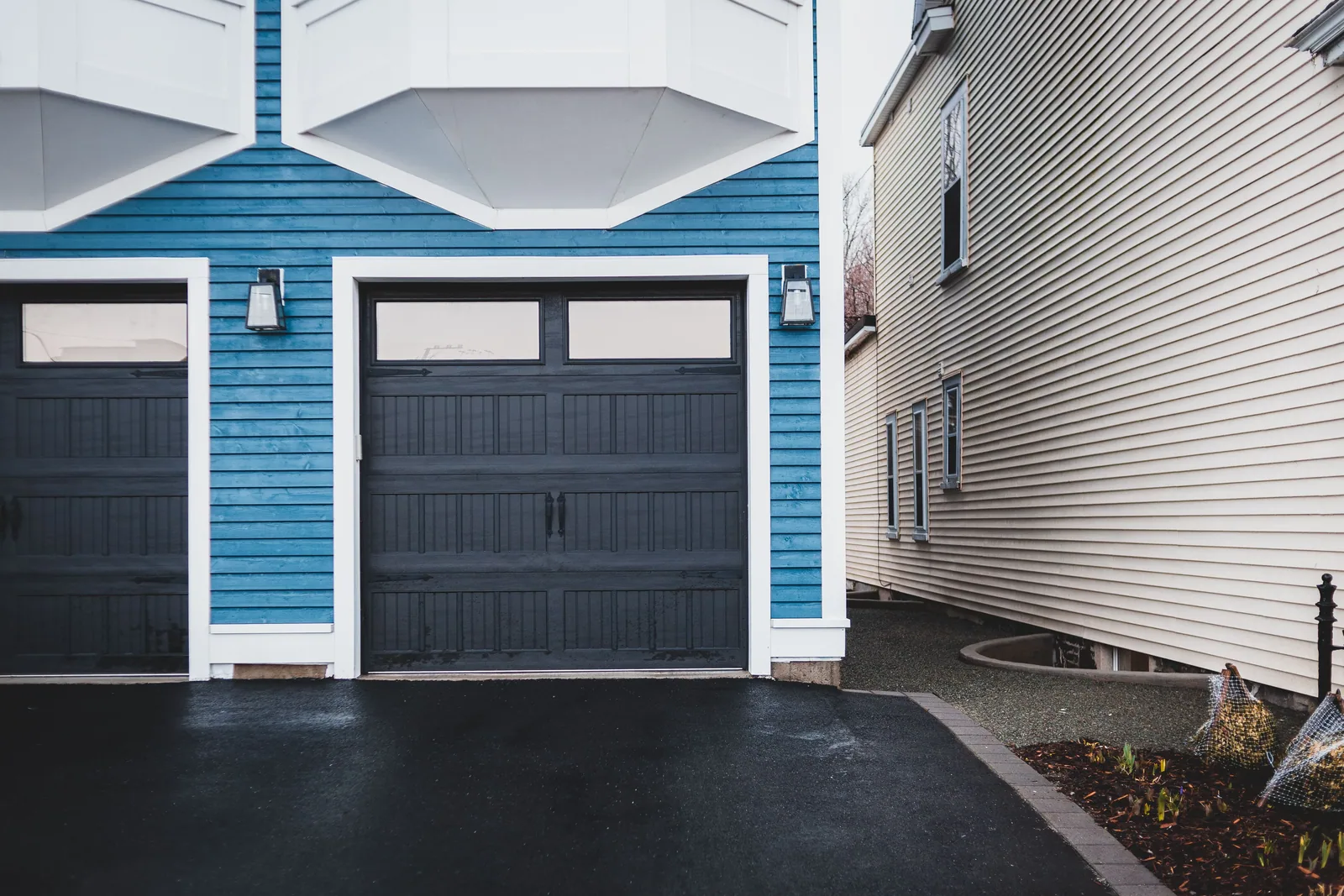
Local detail
The Split Between Old and New
Druid Hills sits about six miles from Atlanta, and its housing stock skews older than the metro average. Across the wider service area, homes run from 1951 up through 2004, with a median around 1978. Druid Hills pulls well ahead of that median - the typical house here went up around 1964. That's a real gap, not a rounding error. A door and opener installed to match a 1964 build is a different animal than one installed for a house finished in 1995, and it changes what breaks and when.
With roughly 3,579 households in the area and a median income near $140,466, a lot of these homes have already been through at least one round of updates - a new roof, new HVAC, maybe a kitchen. The garage door and its hardware are often the one system nobody's touched since the original build, because it still opens and closes and nobody thinks about it until it doesn't.
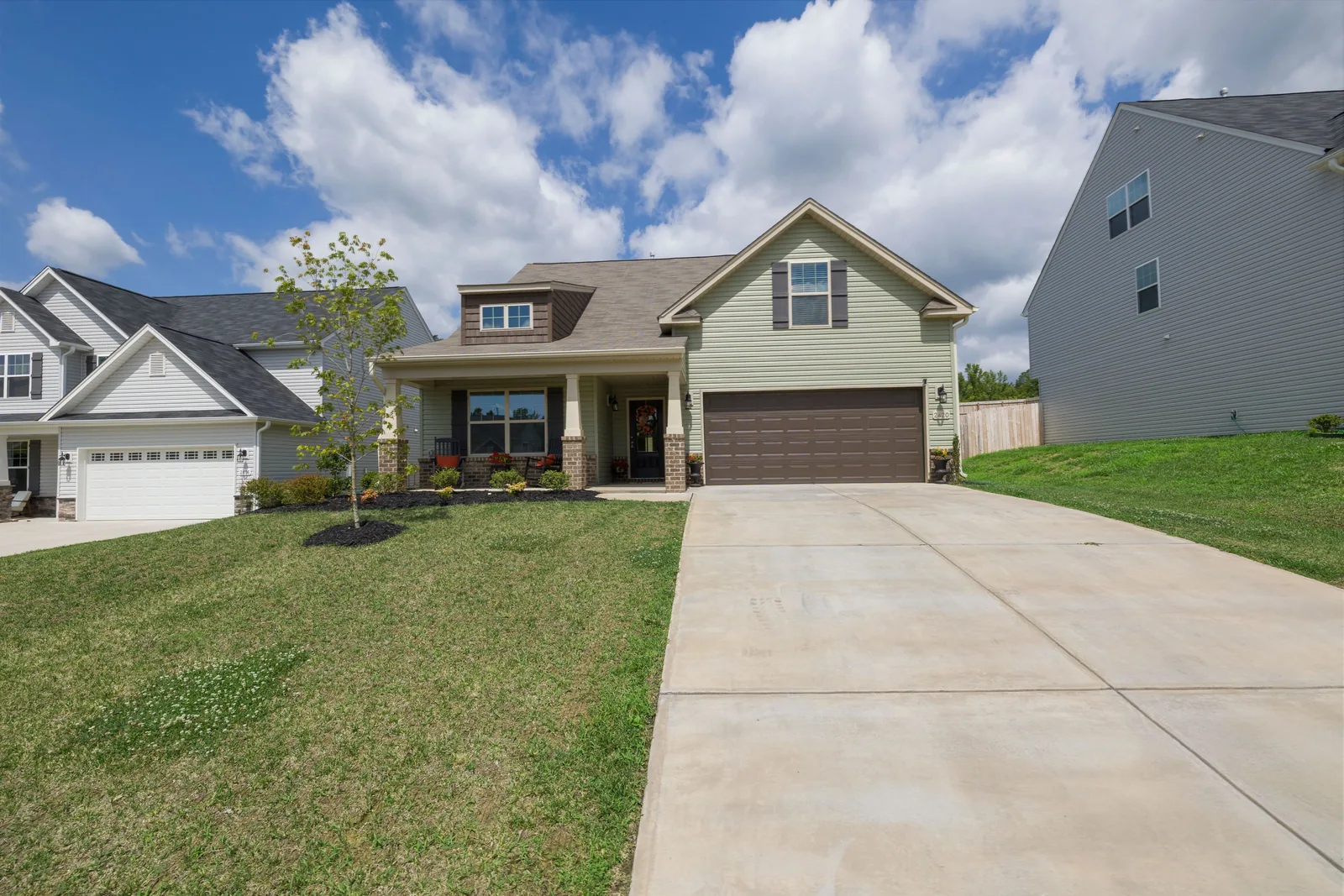
The area
What That Means for Doors
Houses from the early-to-mid 1960s were commonly built with single-panel or early sectional doors on hardware that predates the safety standards you'd expect on anything sold today - no auto-reverse photo eyes, no soft-close, springs sized for lighter doors than the insulated replacements many owners have since installed. When a homeowner swaps in a heavier modern door but keeps the original torsion spring or a same-style opener, the spring wears faster than it should and the opener strains against weight it wasn't sized for.
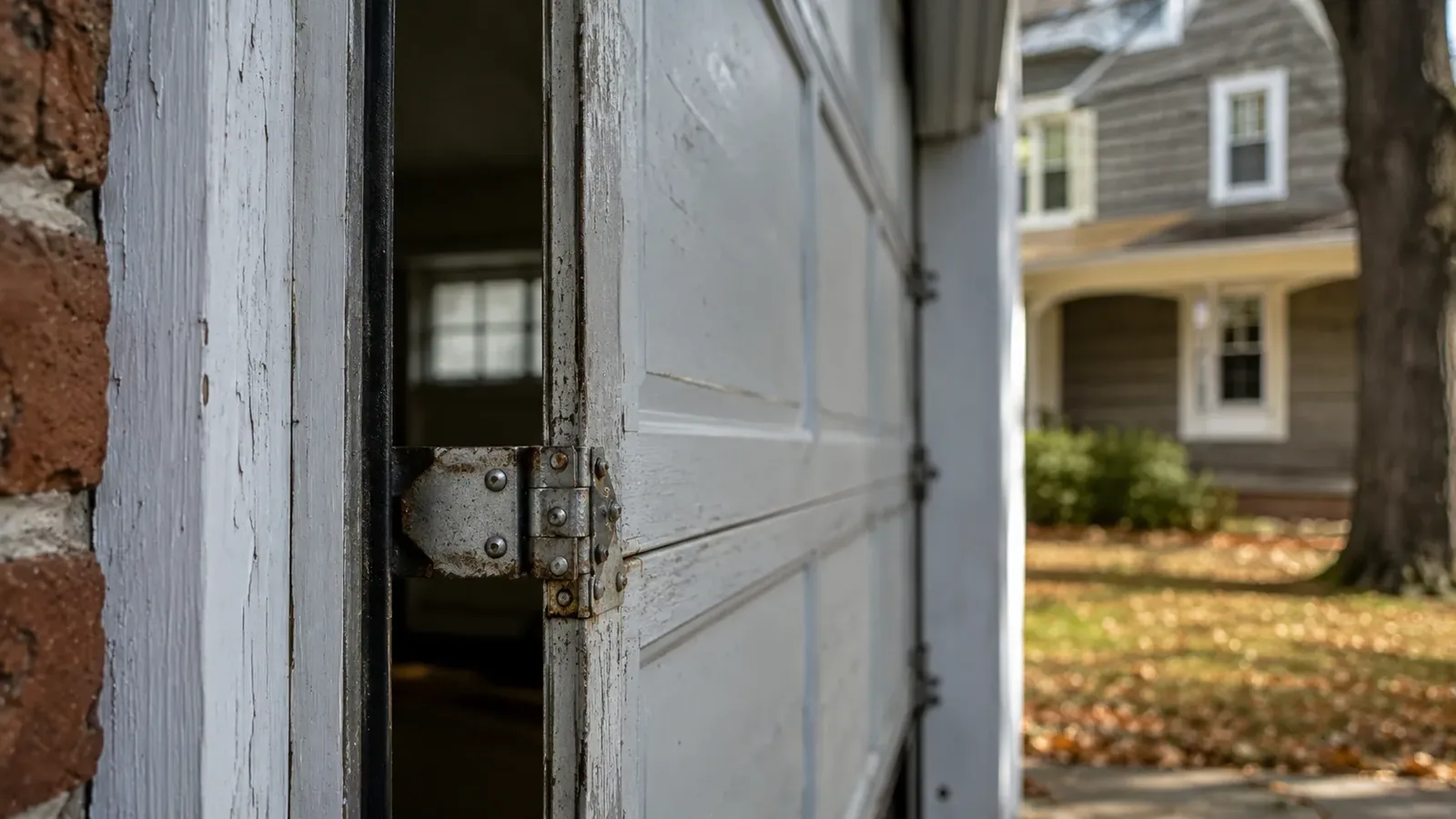
The cold-moderate climate this area sits in isn't brutal, but it's enough that steel tracks and cable ends see seasonal contraction and expansion year after year. On a door pushing sixty years of hardware history, that cycling shows up as rollers going oval, hinges loosening at the panel seams, and cables fraying near the drum. None of that is dramatic - it's just the slow wear of old parts doing a job they weren't built to keep doing this long.
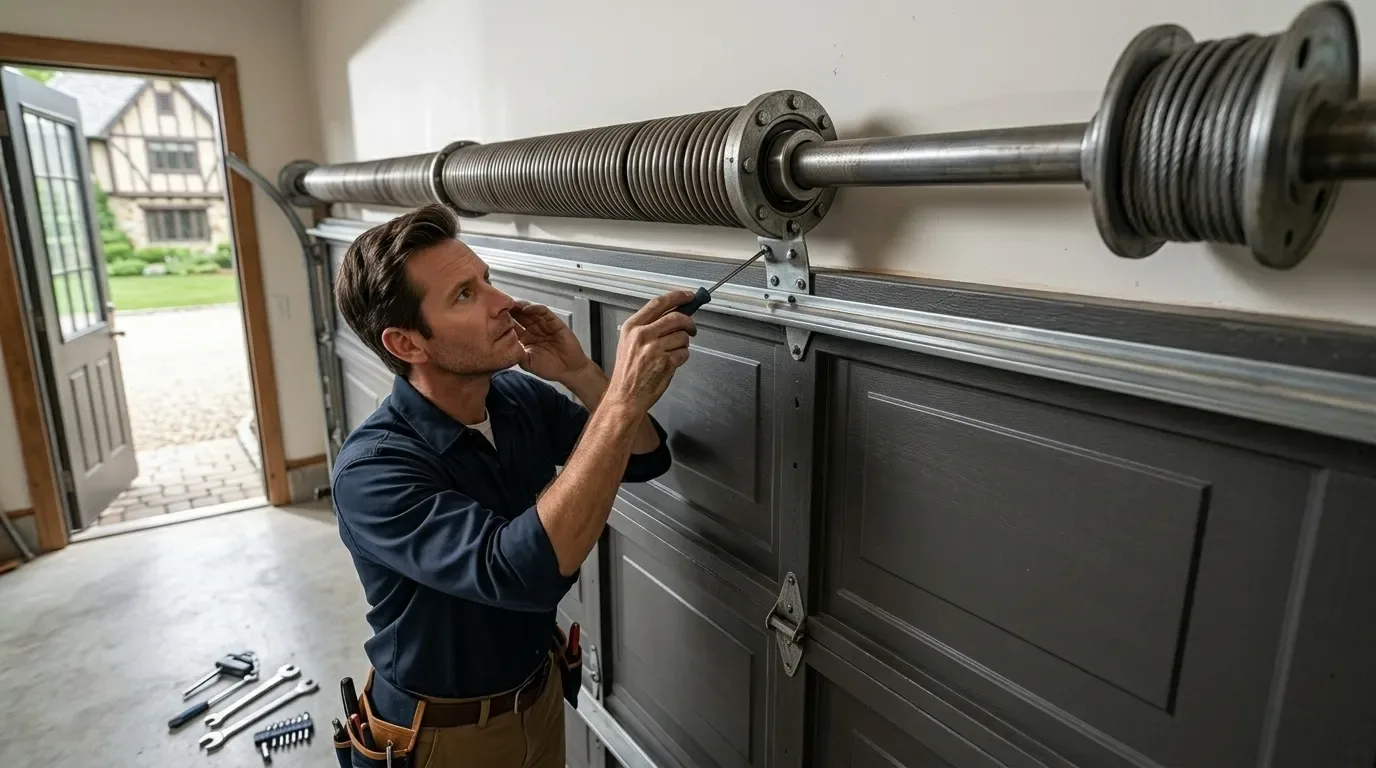
What we find
The Houses Here
A 1964 build date puts a lot of Druid Hills garages in a specific bracket: old enough to have started with single-car or narrow two-car openings, but past the point where doors were manual swing-out. Most got a torsion or extension spring conversion at some point along the way, and many owners have replaced the door face at least once while leaving the original track and header hardware in place. That mix-and-match history is common and it's not a problem on its own - until one of the newer parts is mismatched to one of the older ones.
We don't guess at what's original versus replaced from the driveway. On a house this age, the only way to know if the spring is sized right, the track is square, and the opener's drive gear isn't already stripped is to look at it directly. If a repair on hardware this old is going to cost more than a straight replacement, we'll say so before we start.
How we work
What We Do Most in This Area
On calls in this part of the coverage area, the recurring jobs are torsion spring replacement on doors that were never rebalanced after a heavier panel swap, roller and hinge replacement on tracks that have gone slightly out of square from decades of settling, and opener swaps where the original chain-drive unit has outlived its gears but not its motor housing. We travel to Druid Hills from our base in Atlanta, so we schedule the visit rather than showing up same-day off a local route - worth knowing if you're timing a repair around a stuck door.
Service areas
Other areas we cover near Druid Hills
Questions
Common questions
My house was built in the 1960s - is the original spring still on it?
Possibly, though most homes this age have had at least one spring replaced by now since torsion springs typically last a set number of cycles, not decades. If yours has never been swapped, it's likely undersized for any heavier door installed since the original build. We can check the coil gauge and cycle count against the door's actual weight.
Do you have a location in Druid Hills?
No. We're based in Atlanta and drive out to Druid Hills for jobs, about six miles each way. We don't stage a truck or keep staff in the immediate area, so we schedule visits rather than offering walk-in or same-hour service.
Why does my opener seem underpowered for the door?
On older Druid Hills homes, it's common for a homeowner to replace a single-panel or lightweight door with a heavier insulated one and keep the original opener. The motor then works harder than it was designed to, which shortens the life of the drive gear and the trolley assembly.
Is it worth repairing an old track instead of replacing it?
Depends on the damage. A track that's bent from an impact usually isn't worth straightening - it goes out of square again. A track that's just loose at the brackets from decades of settling is a cheap fix. We'll tell you which one you've got before we quote anything.
Ready when you are
Need a garage door sorted in Atlanta?
Atlanta Garage Door Pros repairs and installs garage doors, springs and openers in Atlanta, GA and the surrounding area.