
Guide
Off-Track Doors: What's Actually Happening in Atlanta Garages
In Atlanta homes built between 1951 and 2004, cold winters and shifting foundations pull garage door tracks out of alignment faster than owners expect.
Local detail
Leaving It Alone
An off-track door doesn't fix itself, and on the housing stock we see around here, waiting usually makes the repair bigger, not smaller. Most of the houses this company works on went up between 1951 and 2004, with a lot of that stock clustered in the 1960s and 70s - the era of steel track riveted to wood jambs that shift as the framing ages. On that hardware, a roller that's climbed half an inch out of the track today is a bent track tomorrow, and a bent track is a job that runs longer and costs more than a bracket tightening would have.
We're not saying panic. A door that's slightly off but still moving smooth on the opener can usually wait a week for a scheduled call. A door that's binding, grinding, or dropping unevenly on one side needs a look before the next use, because that's the cable or the far roller starting to give, not just a loose bracket.
The area
What Local Conditions Do
Atlanta sits in a cold-moderate climate band, which matters more for garage doors than most owners assume. It's not the brutal freeze of a northern winter, but it's enough seasonal swing that the slab under the door and the framing around it move a little every year - expand in summer heat, contract when a cold snap comes through. That cycling walks track brackets a fraction of an inch off plumb over a few seasons. It's slow, which is exactly why it goes unnoticed until the door starts binding on one side.
This isn't a one-time shock event; it's accumulated drift. A door hung plumb in 1978 on a house built in that median year has had four decades of that seasonal push and pull working on the same lag screws. That's a different failure pattern than storm damage or a single hard impact, and it's the one we see most on the stock common in this service area.
What we find
What Is Going On
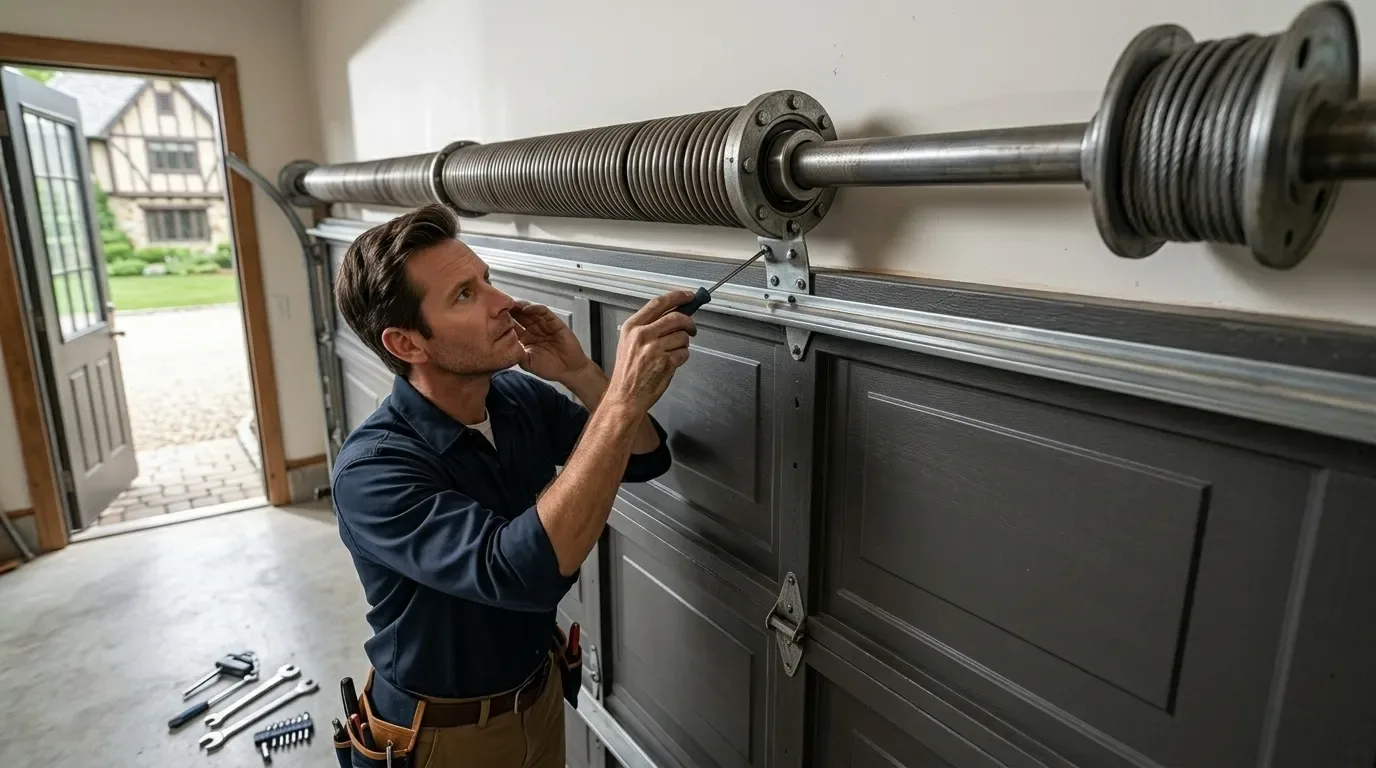
Across the areas this crew covers - from Grove Park two miles out to Stone Mountain fifteen miles east - the same 1978-median build year shows up with the same tell: single-track brackets fastened straight to the jamb trim instead of lagged into a stud behind it. As the wood dries and shrinks over the decades, those fasteners loosen a hair at a time, and the track leans. Add a roller that's worn from thousands of cycles and you get a door that rides high on one side and low on the other, catching at the same spot every time it opens.
In neighborhoods like Buckhead and Vinings, where more of the original 1960s stock has been replaced with newer construction, the failure points look different - newer track, tighter tolerances, less of that lag-screw drift. Closer to the city center, on the older stock, the bracket-and-jamb issue is what we run into first.
How we work
The Common Mistake
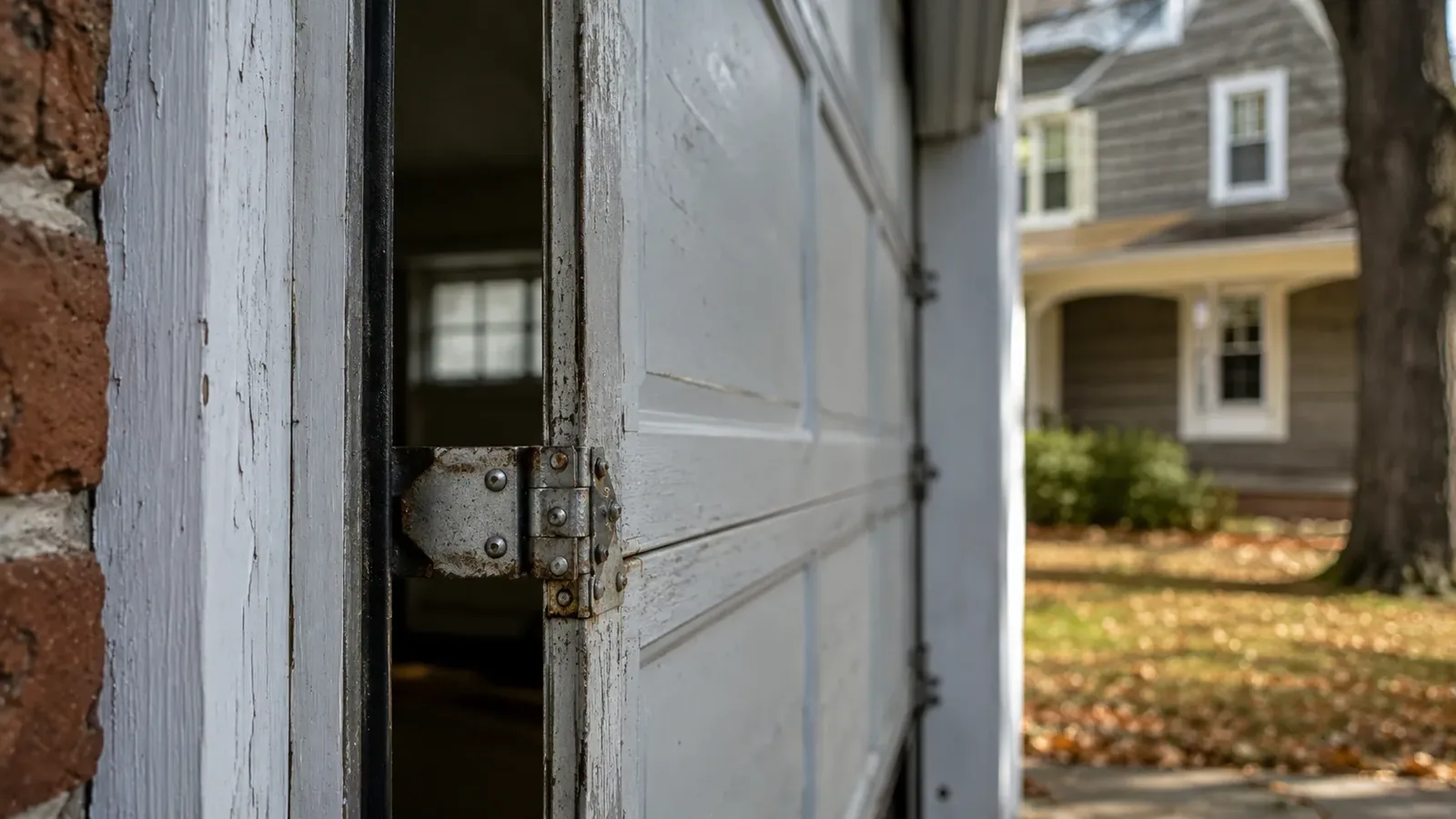
The mistake we see most is someone grabbing a rubber mallet and knocking the track back toward the roller instead of finding out why it moved in the first place. That buys a week, maybe two, before the same spot fails again, and now the track has two impact points instead of one. With 80,135 owner-occupied houses in this service area, a good share of them built before doors came with rollers rated for anything but steel-on-steel contact, that kind of repeated hammering wears the track faster than the original age alone would.
Here's the honest limit: if the track is bent more than a slight bow, or the bracket has pulled the jamb wood itself, realigning it isn't worth doing - the fix is a new section of track and new fasteners into solid framing, not a bend-back. Anyone who tells you a hammer job on a jamb-mounted bracket is a permanent fix is selling you a callback.
Questions
Common questions
How do I know if my door is off track or just out of adjustment?
Off track means a roller has left the channel entirely - you'll see a visible gap or the door binding hard at one spot every cycle. Out of adjustment usually means the door runs but sits crooked when closed. If you can see daylight between the roller and the track, stop using the opener and call before it drops further.
Is this a bigger problem in older Atlanta neighborhoods?
It shows up more often on houses from the 1960s and 70s, which make up a big share of the stock in this service area. Brackets from that era were often fastened straight into jamb trim rather than lagged to a stud, and decades of seasonal wood movement loosens that connection gradually.
Can I just push the track back myself?
You can, and it might hold for a week or two, but if the bracket fastener has pulled loose from the jamb, tapping the track back doesn't fix the actual cause. It usually fails again at the same spot, sometimes worse. Worth a real look before you keep re-hammering it.
Ready when you are
Need a garage door sorted in Atlanta?
Atlanta Garage Door Pros repairs and installs garage doors, springs and openers in Atlanta, GA and the surrounding area.