
Guide
What a Service Call Actually Covers in Atlanta
A breakdown of what an Atlanta Garage Door Pros service call actually inspects, from spring tension to track alignment, built around this city's 1951-2004 housing stock and cold-moderate winters.
Local detail
Leaving It Alone
Not every noisy door needs a truck. If your opener has always chirped a little going up and the door still opens level, that's a maintenance item, not an emergency. We won't invent an emergency to justify a visit.
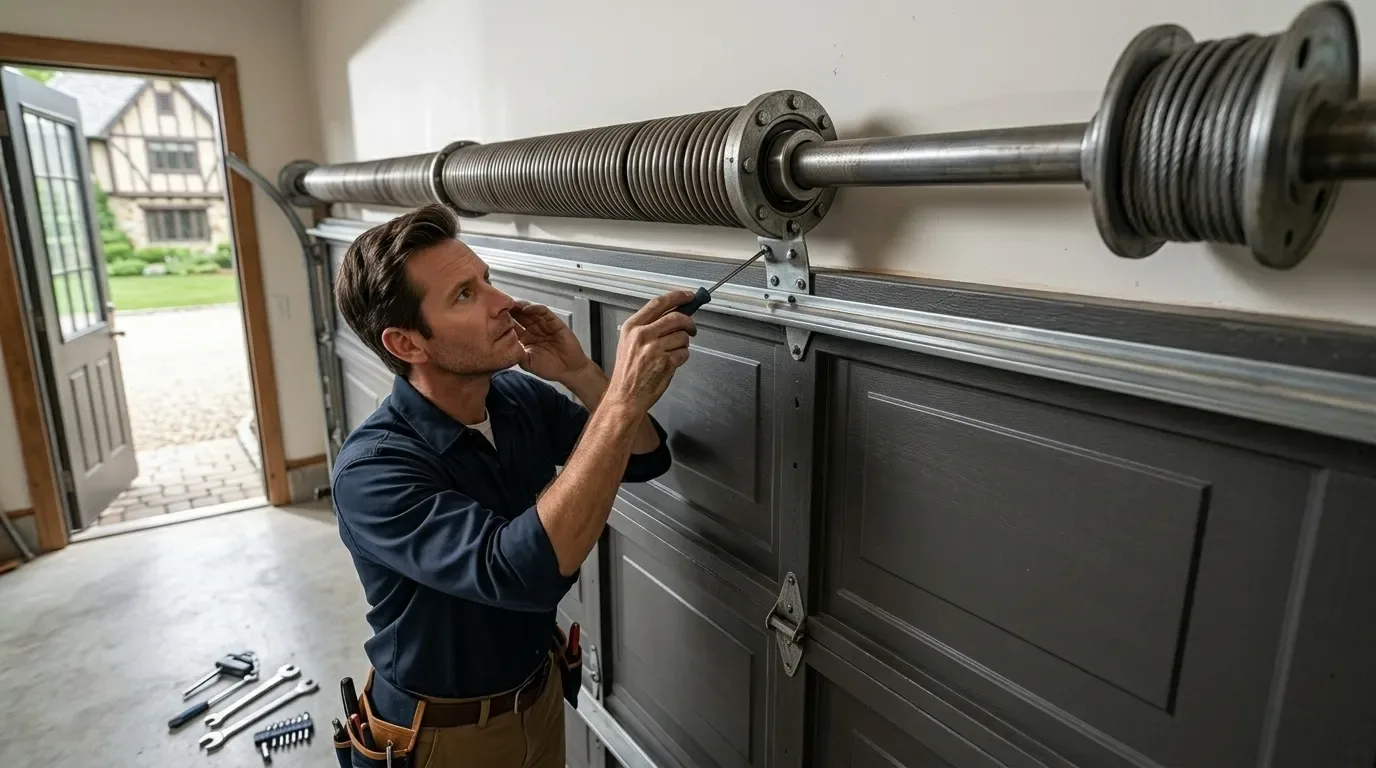
What we will do is walk the whole system, because a house built anywhere in the 1951-2004 window this city was mostly framed in usually has more than one thing worth flagging. A service call means we check the torsion spring's wind and wear, the cable drums, the track alignment top to bottom, the roller condition, the opener's force and travel settings, and the weatherseal at the floor. It's a full pass, not a spot check.
Here's the limitation: if the door is original to a house built in the 1960s or 70s stock this region has a lot of, and the track is a discontinued gauge, we may recommend replacement over repair rather than chase parts that don't exist anymore. We'll tell you which is true for your door before we start work, not after.
The area
What Local Conditions Do
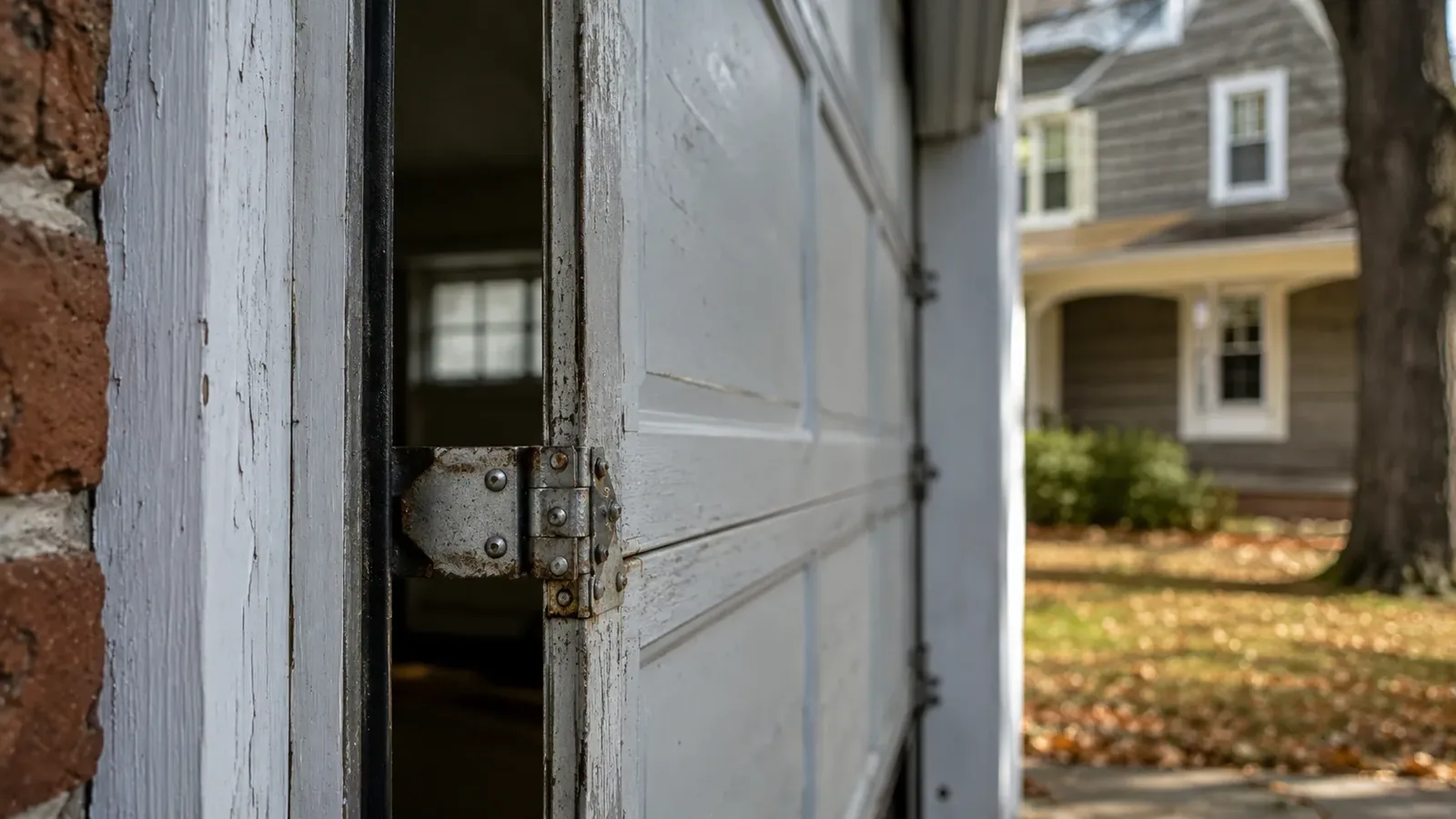
Atlanta sits in a cold-moderate climate band, which means the swing isn't extreme heat or hard freeze, it's the repeated shift between the two across a year. That cycling matters more to a garage door than either extreme alone. Steel panels expand and contract with the daily temperature swing, and every expansion cycle works the fasteners at the hinge points a little looser.
Springs lose tension faster under repeated thermal cycling than under steady cold. On a service call here, we're checking hinge screws and spring tension specifically because of that pattern, not as a generic checklist item. Humidity swings tied to the same moderate-cold cycling also affect wood-adjacent trim and any door bottom seal that's taken on moisture and dried out repeatedly.
None of this is dramatic weather. It's the slow, ordinary cycling that this climate produces, and it's why a door that looked fine last spring can have a different spring tension by fall.
What we find
What Is Going On
Housing in this service area runs from 1951 up through 2004, with the median build year around 1978, and the bulk of the stock across the named neighborhoods and towns we cover clusters in the 1960s and 70s. That matters for a service call because doors and openers installed during original construction, or during a first replacement cycle in the 80s or 90s, are often on hardware that predates today's standard parts. A one-piece door on side-mounted torsion hardware, common in that era, needs a different spring calculation than the sectional doors with center-mounted torsion bars that became standard later.
When we're out on a call in Grant Park, Grove Park, or further out toward Mableton or Forest Park, the first question isn't what's broken, it's what generation of hardware we're looking at. That determines whether the fix is a ten-minute adjustment or a full spring and drum replacement, and it's usually visible within the first few minutes of the visit.
How we work
The Common Mistake
The mistake we see most in this housing stock is treating a slow-closing or uneven door as an opener problem when it's a spring problem, or the reverse. On a door original to the 1960s-70s construction that's common across the area, a spring that's lost even 10-15% of its tension will make the opener strain and can trip the force sensors, which reads to a homeowner as "the opener is dying." Replacing the opener doesn't fix that; the door still isn't balanced and the new opener will strain the same way inside a year.
We check spring tension and door balance before we ever talk about the opener, because in a service area where median household income is around $63,449, we'd rather not sell an opener replacement that doesn't solve the actual problem. It's a five-minute balance test, and it changes what the rest of the call recommends.
Questions
Common questions
How do you decide if my door needs a spring replaced or just adjusted?
We do a balance test first: disconnect the opener, lift the door by hand to waist height, and see if it holds. If it drifts down or shoots up, the spring is out of tension for the door's weight, which is common on original hardware from the 1960s-70s stock in this area. That result tells us adjustment versus replacement before we quote anything.
Does Atlanta's weather actually affect garage door springs?
Yes, though it's the cycling more than any single event. This area sits in a cold-moderate band, meaning temperatures swing rather than sit at an extreme, and that repeated expansion and contraction works spring tension and fastener points harder over a year than steady weather would.
My house was built in the 1970s. Is that going to complicate the repair?
Possibly. A lot of the housing across this service area was built in the 1960s and 70s, and doors from that era are sometimes on side-mounted torsion hardware or track gauges that aren't stocked the way current parts are. We'll tell you on site whether your hardware is standard or whether replacement makes more sense than a repair.
Do you service areas outside the immediate city, like Brookhaven or Chamblee?
Yes, our service area extends out through named communities including Brookhaven, Chamblee, Forest Park, and Mableton, among others, generally within a roughly 15-mile radius of the city core.
Ready when you are
Need a garage door sorted in Atlanta?
Atlanta Garage Door Pros repairs and installs garage doors, springs and openers in Atlanta, GA and the surrounding area.